


Talent Management Dissertation Topics for 2026

Before we dive into the list, let us look at some common questions gathered from student forums and academic discussion platforms. These questions reflect the real concerns students face when they start their research journey.
- How do I find a talent management topic that is actually researchable in 2026?
- What are the biggest challenges in talent acquisition that UK firms are facing right now?
- Can I focus my master’s dissertation on how AI is changing employee retention?
- Is it better to study large multinational corporations or look at talent in small businesses?
- How do I make sure my research objectives align with my dissertation aim?
Choosing the right dissertation topic in the field of talent management is a critical step for your academic and professional success. It is not just about passing a module; it is about demonstrating that you understand how human capital drives organisational value in a fast-changing world. A well-chosen topic allows you to explore current issues like the skills gap, remote work culture, and the ethical use of technology in hiring. By selecting a relevant and narrow area of study, you can contribute meaningful insights to the academic community while building expertise that employers highly value.
Why Selecting the Right Topic in Talent Management Matters
The field of talent management is the backbone of modern business strategy. In 2026, organisations no longer compete just on products or services; they compete on the quality and agility of their people. If you choose a topic that is too broad, your research might lack depth and fail to meet higher education standards. However, a focused topic helps you stay on track and provides a clear roadmap for your data collection.
When you align your research with emerging trends, you show that you are an informed scholar. Universities look for students who can bridge the gap between theory and practice. For example, exploring how “skills-based hiring” is replacing traditional degree-based screening provides a fresh perspective that is highly relevant to current industry shifts. This relevance makes your work more engaging for your markers and more useful for your future career.
Key Research Areas in Talent Management
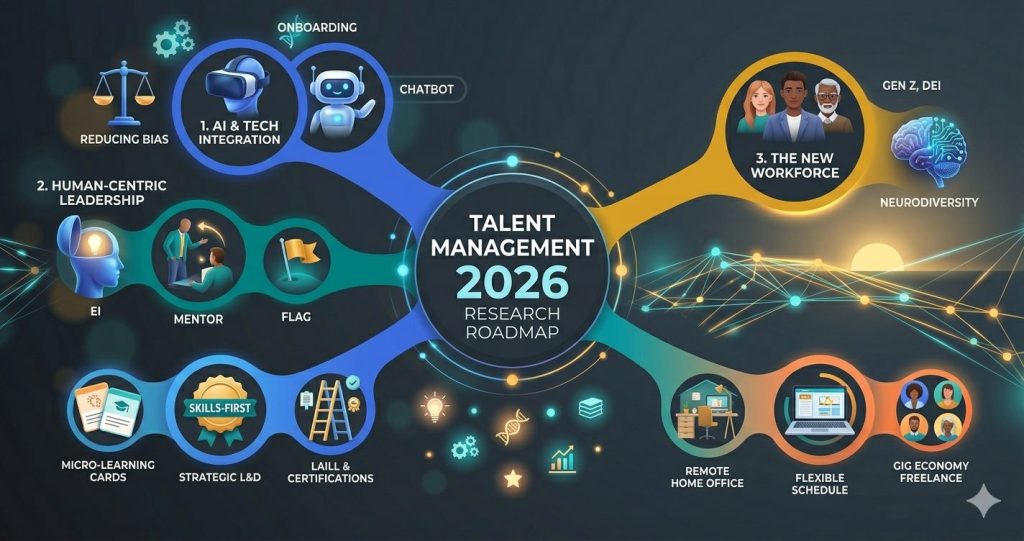
Before you pick a specific title, it is helpful to understand the broad areas where most academic research is currently focused. These domains are established yet evolving, offering plenty of room for original thought.
- Talent Acquisition and Employer Branding: This area looks at how companies attract top candidates through social media, corporate reputation, and innovative recruitment technology.
- Employee Retention and Engagement: Research here focuses on why people stay at a company and what keeps them motivated, especially in hybrid or remote environments.
- Leadership Development and Succession Planning: This covers how organisations identify future leaders and prepare them for high-level roles.
- Diversity, Equity, and Inclusion (DEI): This is a vital area that explores how to build fair and inclusive workplaces that reflect a global society.
- Workforce Analytics and Technology: This involves using data and AI to make better decisions about hiring, performance, and internal mobility.
Download Talent Management Dissertation Topics PDF
You can receive a downloadable PDF containing a personalised list of dissertation topics curated by academic experts. This resource is designed to give you a head start by providing a structured list of ideas that fit your specific interests. To get your copy, you simply need to complete a short form on our platform. This PDF will help you compare different research avenues and select a title that meets your university’s requirements.
Unique Talent Management Dissertation Topics With Research Aims
To help you understand how to structure your research, here are five detailed examples. Each includes a clear research aim and specific objectives to guide your study.
1. The Impact of AI-Driven Recruitment on Candidate Experience in UK Tech Firms
Research Aim: To evaluate how the integration of artificial intelligence in the initial screening process affects the perception and engagement of job applicants in the UK technology sector.
Objective 1: To identify the specific AI tools currently used for candidate screening in UK-based tech companies.
Objective 2: To analyse the correlation between automated feedback and candidate satisfaction levels during the recruitment journey.
Objective 3: To propose a framework for balancing AI efficiency with a human-centred recruitment approach.
2. Exploring the Role of “Skills-First” Hiring in Reducing the Digital Skills Gap
Research Aim: To investigate how moving from credential-heavy screening to skills-based assessments helps organisations fill critical digital roles.
- Objective 1: To examine the limitations of traditional degree-based hiring in the rapidly evolving digital economy.
- Objective 2: To assess the effectiveness of micro-credentials and technical tests in identifying high-potential talent.
- Objective 3: To determine the long-term impact of skills-first hiring on employee performance and retention.
3. Talent Management Strategies for an Ageing Workforce in the Healthcare Sector
Research Aim: To explore how NHS trusts can implement effective talent retention and knowledge transfer strategies for staff approaching retirement.
- Objective 1: To identify the primary reasons why senior healthcare professionals choose early retirement.
- Objective 2: To evaluate the effectiveness of current mentorship programmes in transferring critical skills to younger staff.
- Objective 3: To develop recommendations for flexible working models that encourage late-career retention.
4. The Influence of Employer Branding on Graduate Retention in Small and Medium Enterprises (SMEs)
Research Aim: To determine how the authenticity of an SME’s employer brand influences the long-term commitment of recent university graduates.
- Objective 1: To compare the employer value propositions (EVPs) of UK SMEs with those of large multinational corporations.
- Objective 2: To investigate the factors that lead to graduate turnover within the first two years of employment in small firms.
- Objective 3: To identify low-cost employer branding strategies that improve graduate loyalty in the SME sector.
5. Ethical Implications of Using Predictive Analytics for Employee Performance Management
Research Aim: To critically analyse the ethical challenges and employee perceptions surrounding the use of data-driven performance monitoring tools.
- Objective 1: To map the current landscape of predictive analytics tools used for performance management in global organisations.
- Objective 2: To explore employee concerns regarding privacy, bias, and transparency in automated performance reviews.
- Objective 3: To suggest ethical guidelines for the responsible implementation of workforce analytics.
80 Top Talent Management Dissertation Topics for 2026
Choosing a research area that is both academically rigorous and industry-relevant is the first step toward a successful thesis. As we move into 2026, the focus has shifted toward digital transformation, ethical AI, and the evolution of the “human-centric” workplace.
Below is a curated list of 80 unique dissertation topics, categorised by key research areas, to help you find the perfect focus for your undergraduate, master’s, or PhD research proposal.
Emerging Trends in Talent Management Research Topics
- The shift from talent acquisition to talent transformation in the UK retail sector.
- Building an “antifragile” workforce: Strategies for talent management in economic uncertainty.
- The role of employee value propositions (EVP) in attracting Gen Z talent to traditional industries.
- Exploring the concept of “quiet thriving” and its impact on internal talent mobility.
- Strategic workforce planning for 2026: Balancing human judgement with machine insights.
- The impact of the “Great Stay” on internal promotion pathways and employee motivation.
- How global talent mobility is changing in a post-Brexit UK labour market.
- The role of transparency in salary and benefits for improving talent attraction.
- Assessing the rise of “fractional leadership” as a solution for talent shortages in startups.
- Sustainable talent management: Integrating environmental goals into HR strategy.
The Role of Technology in Talent Management
- Reducing algorithmic bias in AI-powered recruitment platforms: A case study approach.
- The influence of virtual reality (VR) onboarding on new hire socialisation and retention.
- Chatbots in HR: Evaluating their effectiveness in providing real-time employee support.
- The impact of gamified assessments on candidate engagement during the selection process.
- Data privacy and ethical considerations in the use of wearable technology for employee monitoring.
- Using blockchain for secure and transparent verification of academic and professional credentials.
- The role of AI in predicting employee turnover: Opportunities and ethical risks.
- Digital upskilling: How online learning platforms are closing the internal skills gap.
- The effectiveness of automated feedback systems in enhancing employee performance.
- Managing the “digital divide” in talent development within multi-generational teams.
Employee Retention and Engagement
- The relationship between psychological safety and employee retention in high-pressure environments.
- Impact of four-day work week trials on employee engagement and burnout levels.
- Examining the effectiveness of “stay interviews” in reducing voluntary turnover.
- The role of non-monetary rewards in retaining talent during periods of high inflation.
- How “work-from-anywhere” policies influence long-term employee loyalty in tech firms.
- The impact of mid-career sabbaticals on employee burnout and organisational commitment.
- Exploring the link between corporate social responsibility (CSR) and employee pride.
- The role of peer-to-peer recognition programmes in fostering a positive work culture.
- Impact of workplace wellness initiatives on reducing staff absenteeism in the public sector.
- Employee perceptions of fairness in performance-linked bonus structures.
Leadership Development and Succession Planning
- The transition from command-and-control to human-centred leadership in UK finance.
- Effectiveness of executive coaching in developing emotional intelligence for new managers.
- Succession planning for critical specialist roles: Beyond the C-suite perspective.
- The impact of “shadow boards” on leadership development and organisational innovation.
- Exploring the barriers to female leadership in the UK construction and engineering sectors.
- The role of mentorship in accelerating the career progression of ethnic minority talent.
- Assessing the value of simulation-based training for crisis management leadership.
- How remote leadership competencies differ from traditional face-to-face management.
- The impact of leadership styles on the mental health and wellbeing of remote teams.
- Integrating ethical leadership traning into standard management development programmes.
Diversity, Equity, and Inclusion (DEI)
- The effectiveness of blind recruitment practices in increasing workforce diversity.
- Managing neurodiversity in the workplace: Best practices for talent development.
- The impact of inclusive leadership on team creativity and problem-solving outcomes.
- Exploring the “glass cliff” phenomenon for minority leaders in struggling organisations.
- The role of employee resource groups (ERGs) in shaping inclusive corporate policies.
- Addressing the gender pay gap through transparent talent management practices.
- Inclusive onboarding: Designing experiences that support employees from diverse backgrounds.
- The impact of “micro-affirmations” on the sense of belonging for underrepresented talent.
- Evaluating the long-term success of diversity quotas in corporate boardrooms.
- How cultural intelligence affects the success of expatriate talent management.
Remote Work and the Gig Economy
- Managing “proximity bias” in performance reviews for hybrid workforces.
- The impact of the gig economy on traditional career paths and talent loyalty.
- Strategies for building team cohesion in fully remote startups.
- The role of “digital nomads” in the global talent pool: Legal and strategic challenges.
- Impact of remote work on the professional development of entry-level employees.
- Balancing flexibility and control: Managing freelance talent in the creative industries.
- The psychological impact of “always-on” culture in remote talent management.
- Home-office ergonomics and its influence on remote worker productivity and health.
- Using coworking spaces as a talent retention tool for remote-first companies.
- The effectiveness of virtual team-building activities in reducing social isolation.
Learning and Development (L&D)
- The rise of “micro-learning” and its impact on knowledge retention in fast-paced jobs.
- Evaluating the ROI of professional certification programmes for mid-level managers.
- The role of informal learning and “water cooler” conversations in skill acquisition.
- How learning cultures influence organisational agility in the face of market disruption.
- Personalised learning pathways: Using data to tailor development for every employee.
- The impact of “learning by doing” (experiential learning) on leadership competence.
- Assessing the effectiveness of internal “talent marketplaces” for project-based learning.
- The role of reverse mentoring in bridging the technology gap between generations.
- Impact of immersive 360-degree feedback on individual professional growth.
- How apprenticeship schemes in the UK are evolving to meet 2026 technical needs.
Industry-Specific Talent Management
- Talent management challenges in the UK’s emerging green energy sector.
- Retention strategies for frontline staff in the hospitality industry post-pandemic.
- Managing the “brain drain” of medical professionals from the public to the private sector.
- Talent acquisition in the cybersecurity field: Finding skills in a high-demand market.
- The role of family values in talent management within family-owned UK businesses.
- Managing creative talent in the gaming industry: Balancing freedom and deadlines.
- Strategies for attracting and retaining talent in the UK non-profit sector.
- The impact of automation on talent requirements in the manufacturing industry.
- Talent management in the pharmaceutical sector: Navigating long R&D cycles.
- Challenges of managing volunteer talent in large-scale international sporting events.
Conclusion
Choosing a dissertation topic in talent management for 2026 is an exciting opportunity to explore the future of work. Whether you are interested in the ethical use of AI, the importance of inclusive leadership, or the challenges of the gig economy, your research can make a real difference. Remember that a successful dissertation starts with a narrow and researchable topic. By following a structured approach and aligning your aims with clear objectives, you can produce a high-quality piece of work that demonstrates your academic rigour. Approach your research with confidence, stay curious, and always maintain the highest standards of academic integrity.
