


OBG Nursing Dissertation Topics for 2026

What Students Are Asking About OBG Nursing Dissertation Topics
Students across nursing forums, academic communities, and university discussion boards regularly ask questions like these before sitting down to choose their dissertation topic. If any of these sound familiar, this post is written for you:
- What are the best OBG nursing dissertation topics I can research in 2026?
- How do I know if my obstetric and gynecological dissertation topic is strong enough for a master’s or PhD?
- What are the current research topics in OBG nursing that universities are actually accepting?
- Are there any OBG topics for master’s dissertations that focus on mental health or community care?
- Can I find OBG topics for a PhD thesis that are original and not already overdone?
- Where can I get a list of OBG nursing dissertation topics in PDF format?
- What makes a dissertation topic in OBG nursing academically appropriate?
These questions reflect exactly what most nursing students go through when they face the challenge of topic selection. This post is designed to answer all of them, clearly and practically.
Why Your OBG Nursing Dissertation Topic Matters More Than You Think
Choosing the right dissertation topic is one of the most important academic decisions a nursing student will make. In the field of Obstetric and Gynecological (OBG) nursing, this decision carries extra weight because the discipline sits at the intersection of clinical care, public health, patient wellbeing, and evidence-based practice.
A strong topic does several things at once. It demonstrates your understanding of the field. It shows you can identify a genuine gap in research. It signals to your assessors that you are ready to think independently and contribute meaningfully to nursing knowledge.
OBG nursing is a rapidly evolving specialism. Issues like maternal mortality, reproductive rights, postnatal mental health, and access to gynaecological care are reshaping how healthcare systems operate worldwide. Your dissertation is your opportunity to engage with these pressing realities in a structured and academically responsible way.
Students who struggle with online dissertation help often find that their biggest challenge is not writing itself, but narrowing down what to write about. This post is designed to address exactly that.
Download OBG Nursing Dissertation Topics PDF
If you would like a personalised and curated list of OBG nursing dissertation topics tailored to your academic level and research interests, you can access a downloadable PDF prepared by academic subject specialists. The PDF is made available to students after completing a short information form, which helps match you with topics that suit your specific programme and university requirements. This is a useful resource if you are early in the topic selection process and want expert guidance before committing to a direction.
Key Research Areas in OBG Nursing for 2026
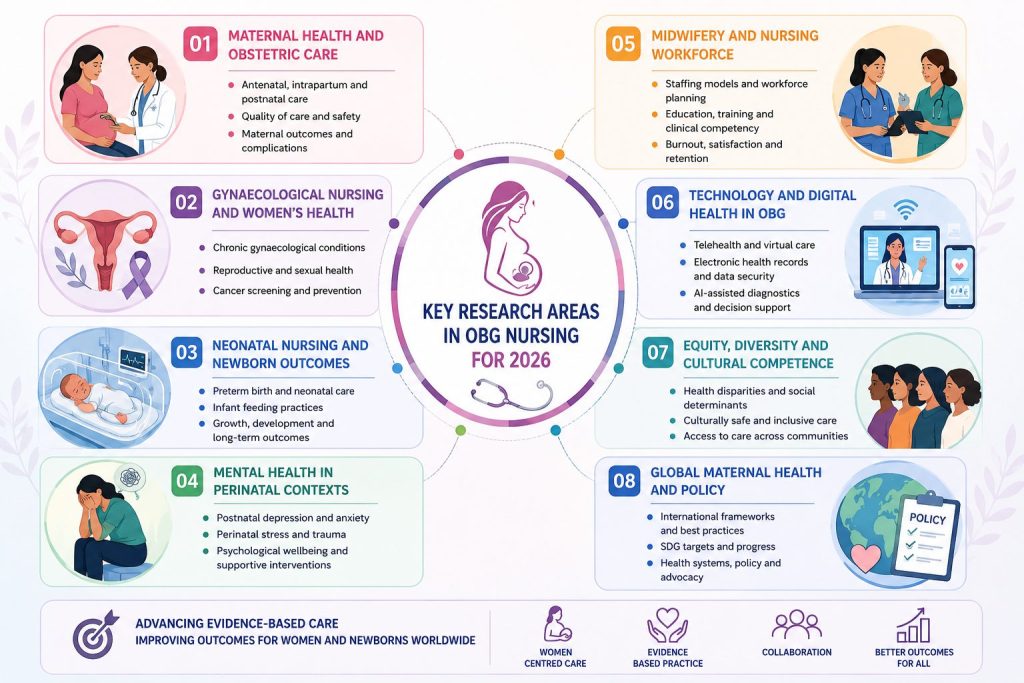
Before exploring individual dissertation topics, it helps to understand the core research areas within OBG nursing. These domains guide what kinds of questions are academically valid and researchable:
- Maternal health and obstetric care — covering antenatal, intrapartum, and postnatal care quality and outcomes
- Gynaecological nursing and women’s health — including chronic conditions, reproductive health, and cancer screening
- Neonatal nursing and newborn outcomes — focusing on preterm care, infant feeding, and developmental support
- Mental health in perinatal contexts — addressing postnatal depression, anxiety, and psychological wellbeing
- Midwifery and nursing workforce — examining staffing models, education, burnout, and clinical competency
- Technology and digital health in OBG — exploring telehealth, electronic records, and AI-assisted diagnostics
- Equity, diversity, and cultural competence — researching health disparities across racial, socioeconomic, and geographic groups
- Global maternal health and policy — analysing international frameworks, SDG targets, and health systems
Five Example OBG Nursing Dissertation Topics with Aims and Objectives
The following examples show how a well-structured dissertation topic is built. Each includes a research aim and between two and three objectives to give you a clear model to follow.
Example 1: Postnatal Depression Screening in Community Midwifery Settings
Research Aim: To evaluate the effectiveness of current postnatal depression screening tools used by community midwives in the United Kingdom.
Objectives:
- To assess how consistently the Edinburgh Postnatal Depression Scale is applied across community midwifery teams
- To identify barriers midwives face when delivering mental health assessments in home settings
- To recommend evidence-based improvements to postnatal screening protocols
Example 2: The Role of Skin-to-Skin Contact in Neonatal Temperature Regulation
Research Aim: To investigate the clinical evidence supporting skin-to-skin contact as a thermal regulation intervention for neonates in low-resource settings.
Objectives:
- To review published clinical trials on kangaroo mother care and neonatal thermoregulation
- To examine how nursing staff training influences skin-to-skin contact practices in neonatal units
- To assess the scalability of skin-to-skin protocols in resource-limited maternity settings
Example 3: Cultural Barriers to Cervical Cancer Screening Among South Asian Women
Research Aim: To explore the cultural and social factors that reduce cervical screening uptake among South Asian women living in urban areas of England.
Objectives:
- To identify cultural beliefs and stigma influencing health-seeking behaviour in this population
- To examine how healthcare providers adapt communication strategies to culturally diverse patients
- To propose culturally sensitive nursing interventions to improve screening attendance
Example 4: Nurse-Led Clinics and the Management of Polycystic Ovary Syndrome
Research Aim: To evaluate the impact of nurse-led gynaecological clinics on the long-term management of polycystic ovary syndrome (PCOS).
Objectives:
- To compare patient outcomes in nurse-led versus physician-led PCOS management settings
- To assess patient satisfaction and self-management confidence following nurse-led consultations
- To identify best practices for expanding nurse-led models in outpatient gynaecological services
Example 5: Intrapartum Care Quality and Maternal Birth Trauma
Research Aim: To examine the relationship between intrapartum nursing care quality and the incidence of psychological birth trauma in first-time mothers.
Objectives:
- To review qualitative evidence on maternal experiences of intrapartum care
- To identify nursing behaviours associated with reducing or increasing birth trauma risk
- To develop a framework for trauma-informed intrapartum nursing practice
80 OBG Nursing Dissertation Topics for 2026
The following topics are organised by subfield and are suitable for undergraduate, master’s, and PhD-level research proposals. All topics reflect current research directions in OBG nursing and are designed to be original, focused, and academically sound.
Maternal Health and Antenatal Care
- The impact of continuity of midwifery care on maternal anxiety levels during the third trimester
- Antenatal education attendance and its relationship to birth preparedness in primiparous women
- Barriers to accessing antenatal care among asylum-seeking women in urban hospitals
- The effectiveness of group antenatal care models compared to individual appointments in reducing preterm birth
- Nursing documentation accuracy in antenatal risk assessment and its impact on clinical decision-making
- The role of community health nurses in supporting high-risk pregnancies in rural areas
- Maternal perceptions of antenatal ultrasound and its influence on bonding behaviours
- Iron deficiency anaemia management in pregnancy: a review of nursing assessment practices
- Gestational diabetes care pathways and the role of specialist nurses in patient education
- The influence of partner involvement in antenatal appointments on birth outcomes
Intrapartum Care and Labour Nursing
- The use of non-pharmacological pain management strategies during labour and their effectiveness
- Nursing communication during intrapartum care and its role in reducing maternal fear
- Delayed cord clamping: nurses’ knowledge, attitudes, and clinical practice
- Factors influencing caesarean section rates and the contribution of midwifery-led units
- Fetal monitoring interpretation errors by nursing staff and implications for patient safety
- Labour ward staffing ratios and their association with adverse intrapartum outcomes
- The impact of water immersion during labour on maternal pain perception and delivery outcomes
- Episiotomy decision-making practices among midwives and its effect on perineal recovery
- Women’s experiences of obstetric violence and the role of nursing advocacy in intrapartum settings
- Continuous support during labour by nurses and midwives: evidence for clinical practice
Postnatal and Neonatal Nursing
- Early breastfeeding initiation and the role of postnatal ward nursing support
- Nurse-led postnatal home visits and their effectiveness in reducing readmission rates
- Skin-to-skin contact practices in neonatal intensive care units and staff compliance
- Neonatal jaundice management: nurses’ assessment accuracy and phototherapy initiation
- The influence of postnatal ward nurse-to-patient ratios on breastfeeding success rates
- Parental anxiety in neonatal intensive care units and nursing interventions to support families
- Safe sleep guidance provided by postnatal nurses and its impact on sudden infant death syndrome awareness
- Kangaroo mother care in preterm infants: barriers to implementation in NHS neonatal settings
- Neonatal pain assessment tools: a comparative review of their use in postnatal nursing practice
- Maternal engagement in neonatal care and the nurse’s role in facilitating hands-on parenting
Perinatal and Postnatal Mental Health
- The accuracy and consistency of Edinburgh Postnatal Depression Scale administration by community midwives
- Perinatal anxiety in adolescent mothers: nursing assessment and early intervention strategies
- Paternal postnatal depression: awareness levels among obstetric nursing teams
- The relationship between birth trauma and post-traumatic stress disorder in postnatal women
- Nurses’ confidence in identifying and escalating perinatal mental health concerns
- Culturally adapted mental health screening tools for postnatal women from minority ethnic backgrounds
- The impact of specialist perinatal mental health nursing teams on hospital readmission rates
- Stigma associated with postnatal depression and its effect on help-seeking behaviour
- Tocophobia (fear of childbirth) and its management within antenatal nursing care
- Infant feeding choices and their association with maternal mental health in the early postnatal period
Gynaecological Nursing and Women’s Health
- Nurses’ role in cervical cancer screening promotion and the barriers they face in practice
- Patient education in endometriosis management: the effectiveness of nurse-led information sessions
- Gynaecological nursing care for women with learning disabilities: an exploration of current practice
- Menopause management in primary care: the expanding role of the practice nurse
- Nurses’ knowledge and attitudes towards vulvodynia and its impact on clinical assessment
- The effectiveness of nurse-led colposcopy services in reducing waiting times and patient anxiety
- Polycystic ovary syndrome self-management: the role of gynaecological nurses in patient empowerment
- Uterine fibroid management and the nurse’s role in supporting treatment decision-making
- Sexually transmitted infection screening in antenatal settings: nursing practice and patient outcomes
- Nursing assessment and management of abnormal uterine bleeding in outpatient gynaecological clinics
Reproductive Health and Family Planning
- Contraceptive counselling by nurses in primary care: a review of consistency and accuracy
- Nurses’ role in supporting women experiencing recurrent pregnancy loss
- Teenage pregnancy prevention: evaluating school-based nursing interventions
- Intrauterine device insertion by specialist nurses and patient-reported experience outcomes
- Long-acting reversible contraception uptake among women from deprived communities and the nurse’s influence
- Post-abortion care nursing: emotional support provision and its clinical effectiveness
- Fertility awareness education by nurses and its impact on conception planning outcomes
- Emergency contraception access and the nurse prescriber’s role in reducing delays
- Preconception nursing advice and its influence on maternal and fetal outcomes
- Infertility treatment support: nursing roles in assisted reproduction settings
Health Disparities and Cultural Competence in OBG Nursing
- Racial disparities in maternal mortality and the role of culturally competent nursing care
- Black women’s experiences of maternity care in the NHS and implications for nursing practice
- Language barriers in obstetric care and the use of professional interpreters versus ad hoc interpreters
- Female genital mutilation care in obstetric settings: nurses’ preparedness and clinical confidence
- The impact of deprivation on access to gynaecological services and nursing’s role in reducing inequality
- Indigenous women’s birthing experiences and lessons for culturally safe nursing practice globally
- Traveller community women’s engagement with maternity services and nursing outreach strategies
- Migrant women’s perceptions of OBG nursing care in the United Kingdom
- Rural-urban disparities in antenatal nursing care quality and their effect on maternal outcomes
- Refugee women’s obstetric experiences and trauma-informed approaches in nursing care
Technology, Digital Health, and Innovation in OBG Nursing
- Telehealth antenatal consultations and their acceptability to pregnant women and nursing staff
- The use of mobile health applications by pregnant women and implications for nursing education
- Electronic fetal monitoring systems and nursing interpretive accuracy in real-time settings
- Artificial intelligence-assisted cervical screening and the evolving role of the gynaecological nurse
- Digital patient records in maternity care and their impact on nursing documentation quality
- Remote postnatal support programmes and their effectiveness in reducing postnatal depression symptoms
- Simulation-based training for OBG nursing students and its impact on clinical competence
- Wearable technology in obstetric care: nursing considerations for patient safety and data privacy
- Social media use among postnatal women and its influence on infant feeding decisions
- Point-of-care testing in gynaecological nursing: clinical accuracy and implementation challenges
How to Choose the Right OBG Nursing Dissertation Topic for Your Level
Not every topic in this list will suit every student equally. The right dissertation topic depends on your academic level, your clinical background, and the resources available to you.
Undergraduate Students
At undergraduate level, topics should be focused, achievable, and grounded in existing literature. You are expected to demonstrate critical thinking and a clear understanding of clinical practice rather than generating new empirical data. Topics that involve a systematic literature review or a small-scale qualitative exploration work well at this level.
Master’s Students
OBG topics for master’s dissertations should offer an original perspective on an existing clinical problem. You are expected to engage with theory, justify your methodology, and contribute something new to the conversation, even if modestly. Mixed-methods or single-method empirical studies are common at this level.
PhD Researchers
OBG topics for a PhD thesis must demonstrate genuine originality and scholarly independence. PhD research in OBG nursing is expected to make a distinct contribution to knowledge. Topics should be framed around clear theoretical frameworks and robust methodological designs. If you are considering PhD research topics in OBG nursing, look for areas where the evidence base is genuinely underdeveloped or contested.
Tips for Narrowing Down Your OBG Nursing Dissertation Topic
Selecting a topic is only the beginning. Here are some practical steps to help you move from a broad idea to a precise, researchable question:
- Start with what you have seen clinically. Your placement experience is a valid academic resource. Problems you observed directly often lead to the most authentic and motivated research.
- Search recent journals. Look at the Journal of Obstetric, Gynecologic and Neonatal Nursing, Midwifery, and BMC Pregnancy and Childbirth for recent publications that identify gaps or call for further research.
- Talk to your supervisor early. Your academic supervisor can tell you quickly whether a topic is feasible, too broad, or already well-covered.
- Check the ethics requirements. Some OBG research involving vulnerable populations requires ethical approval that may not be possible within your timeframe. Be realistic from the start.
- Consider your data sources. Whether you plan to use secondary data, conduct interviews, or carry out a literature review, your topic must match your available resources and skills.
Students who invest time in this narrowing process consistently produce stronger dissertations than those who rush the topic selection stage.
Conclusion
Choosing an OBG nursing dissertation topic is one of the most meaningful decisions you will make during your academic programme. The field is rich, the need for quality research is urgent, and your contribution, however focused, has real value.
This post has outlined the major research areas within obstetric and gynecological nursing, provided 80 carefully selected current research topics in OBG nursing, and offered structured examples to help you understand what a strong dissertation topic looks like at different academic levels. Whether you are just beginning to explore ideas or narrowing down from a shortlist, the topics and guidance here are designed to support your journey.
Academic rigour, personal interest, and clinical relevance are the three qualities that make a dissertation topic genuinely worth pursuing. When all three are present, the research process becomes more focused, more motivated, and ultimately more rewarding.
Approach your dissertation with intellectual curiosity and take the time to choose your topic thoughtfully. The effort you invest now will shape the quality and credibility of everything that follows.
