


Hematology Dissertation Topics for 2026

Questions Students Are Asking About Hematology Dissertation Topics
Students across the UK and beyond regularly share their concerns about dissertation topic selection on academic forums, university discussion boards, and student support communities. The following questions reflect what many students are genuinely asking right now:
- What are the most relevant hematology dissertation topics for 2026?
- How do I choose a hematology thesis topic that suits my academic level?
- What are the latest research ideas in hematology for an MSc thesis?
- Which research proposal topics in hematology are suitable for a PhD dissertation?
- Can I find hematology project topics for BSc students that are manageable in scope?
- What subfields within hematology are most active in current academic research?
- How narrow should my dissertation topic be in clinical hematology?
- Where can I find reliable guidance for hematology thesis topics for students in the UK?
If any of these questions sound familiar, this post is written for you. It covers everything you need to move forward with confidence.
Why Choosing the Right Dissertation Topic in Hematology Matters
Hematology sits at the centre of modern medicine. It covers blood, bone marrow, and the lymphatic system, and its reach extends into oncology, immunology, genetics, and transfusion medicine. Choosing the right dissertation topics in hematology is not simply a procedural step. It shapes your entire research journey, from the literature you read to the methodology you use and the contribution your work makes to the field.
A well-selected topic allows you to demonstrate critical thinking and academic maturity. A poorly chosen one, often too broad or already over-researched, can leave you struggling to make an original contribution. Students who seek online dissertation help early in the process tend to approach their research with more clarity and direction.
The good news is that hematology in 2026 is a field full of momentum. Advances in gene therapy, artificial intelligence in diagnostics, precision medicine, and rare blood disorder research are opening new doors for academic investigation at every level.
Download Hematology Dissertation Topics PDF
Students who want a personalised list of dissertation topics curated by subject specialists can receive a downloadable PDF after completing a short academic preferences form. The topics in the PDF are selected based on your field, academic level, and area of interest, making it far more targeted than a general list. This resource is prepared by academic experts who understand current research standards, institutional expectations, and field-specific challenges.
Key Research Areas in Hematology You Can Explore
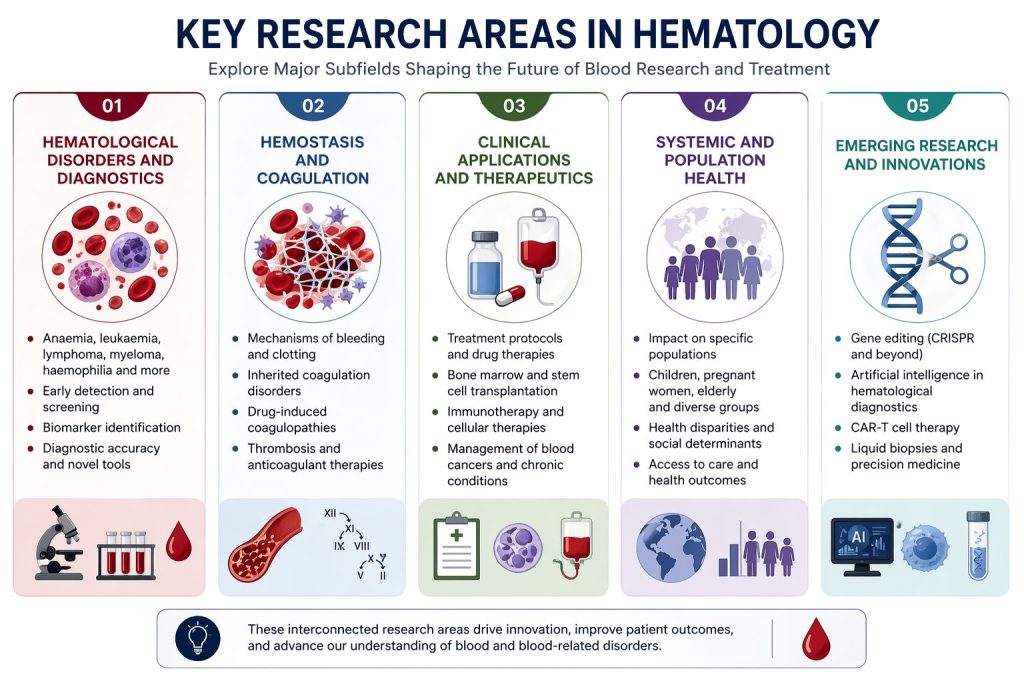
Before selecting a topic, it helps to understand the major subfields within hematology. Each area has its own body of literature, methodological approaches, and ongoing research gaps.
Hematological Disorders and Diagnostics covers conditions such as anaemia, leukaemia, lymphoma, myeloma, and haemophilia. Research in this area often focuses on early detection, biomarker identification, and diagnostic accuracy.
Hemostasis and Coagulation explores the complex mechanisms that control bleeding and clotting. Topics range from inherited coagulation disorders to drug-induced coagulopathies and thrombosis.
Clinical Applications and Therapeutics includes treatment protocols, drug therapies, bone marrow transplantation, immunotherapy, and the clinical management of blood cancers and chronic conditions.
Systemic and Population Health examines how hematological conditions affect specific populations, including children, pregnant women, elderly patients, and ethnically diverse groups, with a focus on health disparities and access to care.
Emerging Research and Innovations is one of the fastest-growing areas, covering gene editing, artificial intelligence in haematological diagnostics, CAR-T cell therapy, and liquid biopsies.
Five Example Dissertation Topics With Research Aims and Objectives
Understanding how a well-formed dissertation topic is structured will help you develop your own. Below are five examples across different subfields, each with a research aim and two to three objectives.
Topic 1: The Role of Next-Generation Sequencing in Diagnosing Rare Inherited Anaemias
Research Aim: To evaluate the diagnostic accuracy and clinical utility of next-generation sequencing in identifying rare inherited anaemia variants in paediatric patients.
Objectives:
- To review current diagnostic pathways for rare inherited anaemias in UK clinical settings
- To assess the sensitivity and specificity of next-generation sequencing compared to conventional diagnostic methods
- To identify barriers to the implementation of genomic testing in paediatric haematology
Topic 2: CAR-T Cell Therapy Outcomes in Relapsed Diffuse Large B-Cell Lymphoma
Research Aim: To critically analyse clinical outcomes and adverse effects of CAR-T cell therapy in adult patients with relapsed or refractory diffuse large B-cell lymphoma.
Objectives:
- To synthesise published clinical trial data on CAR-T cell therapy efficacy in relapsed DLBCL
- To compare response rates, remission duration, and toxicity profiles across available CAR-T constructs
- To assess patient eligibility criteria and their implications for equitable access to therapy
Topic 3: Artificial Intelligence in the Morphological Classification of Blood Disorders
Research Aim: To investigate the potential of artificial intelligence tools to improve the accuracy and consistency of blood cell morphology classification in haematology laboratories.
Objectives:
- To identify leading AI platforms currently used or under evaluation in clinical haematology
- To evaluate the diagnostic performance of AI-based morphological analysis compared to trained haematologists
- To discuss ethical and regulatory considerations for AI integration in laboratory diagnostics
Topic 4: Coagulation Profiles in COVID-19 Patients and Risk of Thrombotic Events
Research Aim: To examine the relationship between abnormal coagulation markers and the incidence of thrombotic complications in hospitalised COVID-19 patients.
Objectives:
- To conduct a systematic review of coagulation studies conducted during the COVID-19 pandemic
- To identify which haematological biomarkers most reliably predict thrombotic risk in severe disease
- To evaluate current anticoagulation management strategies and their outcomes in COVID-19 cohorts
Topic 5: Health Disparities in Sickle Cell Disease Management Across Ethnic Groups in the UK
Research Aim: To assess whether there are measurable disparities in the management and outcomes of sickle cell disease among different ethnic communities in the United Kingdom.
Objectives:
- To compare treatment access, hospitalisation rates, and complication frequency across ethnic groups using NHS data
- To identify socioeconomic and institutional factors that contribute to unequal care in sickle cell disease
- To recommend evidence-based policy interventions to address identified disparities
A Comprehensive List of Hematology Dissertation Topics for 2026
The following 80 topics are organised under five key subfields. Each is designed to be narrow enough for original research while remaining academically significant. These hematology research paper topics for MSc thesis work, PhD proposals, and undergraduate final-year projects have been developed with current academic standards in mind.
Hematological Disorders and Diagnostics
- The diagnostic accuracy of flow cytometry in differentiating subtypes of acute leukaemia in adult patients
- Genetic mutations associated with treatment-resistant chronic myeloid leukaemia and their clinical implications
- The prevalence and underdiagnosis of iron deficiency anaemia in adolescent females attending secondary schools in the UK
- Biomarker discovery for early-stage myelodysplastic syndrome using proteomic profiling
- Comparing the diagnostic yield of bone marrow biopsy and aspirate in suspected haematological malignancies
- The role of peripheral blood smear interpretation in the identification of haemolytic anaemias
- Molecular characterisation of del(5q) myelodysplastic syndrome and its response to lenalidomide therapy
- The clinical significance of eosinophilia as an incidental haematological finding in primary care
- Utility of lactate dehydrogenase as a prognostic biomarker in non-Hodgkin lymphoma staging
- Evaluating the diagnostic sensitivity of complete blood count parameters in screening for haematological malignancies
- Thalassaemia carrier screening programmes and their effectiveness in reducing disease burden in high-prevalence communities
- Neutropenia classification in chemotherapy patients and its association with infection-related morbidity
- The role of haemoglobin electrophoresis in diagnosing structural haemoglobin variants in ethnically diverse populations
- Reticulocyte count as an early indicator of bone marrow recovery following haematopoietic stem cell transplantation
- Distinguishing reactive thrombocytosis from essential thrombocythaemia using clinical and molecular criteria
- The impact of vitamin B12 deficiency on neurological and haematological outcomes in elderly patients
- Clonal haematopoiesis of indeterminate potential and its association with cardiovascular risk in the general population
- The clinical utility of JAK2 V617F mutation testing in the diagnosis of myeloproliferative neoplasms
- Incidence and risk factors for haematological complications following solid organ transplantation
- Assessment of red cell distribution width as a prognostic marker in chronic inflammatory conditions
Hemostasis and Coagulation
- Rivaroxaban versus warfarin in preventing stroke in non-valvular atrial fibrillation: a haematological outcomes review
- Factor V Leiden mutation and the cumulative thrombotic risk in women using combined oral contraceptives
- Coagulation factor replacement therapy adherence in haemophilia A patients and its effect on joint outcomes
- The role of fibrinogen levels in predicting haemorrhagic complications during liver transplantation surgery
- Contact pathway activation in sepsis-associated coagulopathy and potential therapeutic targets
- Platelet-rich plasma therapy in musculoskeletal injury repair: haematological mechanisms and clinical evidence
- Neonatal haemostasis: normal reference ranges and the diagnostic challenge of bleeding disorders in newborns
- Antiphospholipid syndrome in paediatric patients: clinical features, diagnosis, and long-term management
- Acquired haemophilia A in post-partum women: diagnosis, inhibitor management, and treatment outcomes
- Recurrent venous thromboembolism risk stratification using combined genetic and clinical risk models
Clinical Applications and Therapeutics
- Comparative effectiveness of autologous versus allogeneic haematopoietic stem cell transplantation in multiple myeloma
- The impact of hypomethylating agent therapy on transfusion dependence in myelodysplastic syndrome patients
- Venetoclax combination regimens in treatment-naive chronic lymphocytic leukaemia: clinical trial evidence review
- Immunotherapy-related haematological toxicities in melanoma patients receiving checkpoint inhibitors
- Anaemia management in chronic kidney disease: erythropoiesis-stimulating agents versus hypoxia-inducible factor prolyl hydroxylase inhibitors
- Transfusion thresholds in critically ill patients: a comparison of restrictive and liberal red cell transfusion strategies
- Graft-versus-host disease prophylaxis strategies in matched unrelated donor stem cell transplantation
- The clinical management of hydroxyurea resistance in patients with polycythaemia vera
- Rituximab maintenance therapy in follicular lymphoma and its impact on progression-free survival
- Evaluating the role of minimal residual disease testing in guiding therapy decisions in acute lymphoblastic leukaemia
- Asparaginase-associated pancreatitis in paediatric acute lymphoblastic leukaemia treatment protocols
- Iron chelation therapy in transfusion-dependent thalassaemia: comparing deferasirox and deferiprone outcomes
- Luspatercept treatment responses in lower-risk myelodysplastic syndrome with ring sideroblasts
- Erythrocyte exchange transfusion in sickle cell disease: indications, risks, and long-term outcomes
- Bortezomib-based induction therapy in newly diagnosed multiple myeloma and its effect on renal function
- The management of febrile neutropenia in haematology-oncology patients using risk stratification models
- Granulocyte transfusion therapy in severe neutropenic infection: clinical evidence and current practice
- Ibrutinib discontinuation syndrome in chronic lymphocytic leukaemia and haematological management strategies
- Platelet transfusion thresholds in haematology patients undergoing invasive procedures: clinical guideline review
- The role of consolidation chemotherapy in adult acute myeloid leukaemia following complete remission
Systemic and Population Health
- Prevalence and determinants of anaemia in pregnant women attending antenatal clinics in Sub-Saharan Africa
- Sickle cell disease burden in the UK and the impact of the NHS Newborn Screening Programme on outcomes
- Gender differences in the presentation and diagnosis of haematological malignancies across UK NHS trusts
- The effect of social deprivation on access to haematology specialist services in England
- Comparative outcomes of haematological cancers in elderly patients receiving standard versus reduced-intensity treatment
- Malaria-associated anaemia in children under five in endemic regions: epidemiology and haematological consequences
- The long-term haematological effects of bariatric surgery in morbidly obese patients
- Blood donor deferral rates in the UK and their impact on the adequacy of national blood supply
- Anaemia prevalence among patients with type 2 diabetes and its association with diabetic nephropathy progression
- Haematological manifestations of HIV infection in the era of combination antiretroviral therapy
- The effect of vegetarian and vegan diets on haematological parameters in university-age students in the UK
- Racial disparities in multiple myeloma incidence, treatment access, and survival outcomes in Western healthcare systems
- Paediatric thrombosis: incidence trends, clinical risk factors, and outcomes in UK tertiary care centres
- Cancer-associated thrombosis in outpatient oncology: risk models, prophylaxis, and patient perspectives
- The impact of long COVID on haematological indices and coagulation function in previously hospitalised patients
Emerging Research and Innovations
- CRISPR-Cas9 gene editing in beta-thalassaemia: current clinical trial results and future therapeutic potential
- The diagnostic application of artificial intelligence in identifying abnormal white cell morphology from peripheral blood films
- Liquid biopsy technology and its emerging role in monitoring haematological malignancy treatment response
- Single-cell RNA sequencing in characterising leukaemic stem cell heterogeneity in acute myeloid leukaemia
- Bispecific antibody therapies in relapsed or refractory multiple myeloma: mechanisms, outcomes, and toxicity profiles
How to Select the Right Topic From This List
Browsing 80 research proposal topics in hematology for a PhD dissertation or undergraduate project can feel overwhelming. Here are some practical steps to help you narrow down your choice.
Start with what interests you. Research takes months. Choose a topic that genuinely motivates you, even when the work gets difficult.
Consider your academic level. BSc students typically need a more contained scope, often a focused review or small-scale study. MSc and PhD students are expected to contribute new knowledge or synthesis.
Check the available literature. A topic that has too little published research can leave you without sufficient sources. A topic buried in thousands of papers may be difficult to distinguish your work within.
Speak to your supervisor early. Most supervisors appreciate students who come with two or three shortlisted topics rather than a single fixed idea. This shows flexibility and academic maturity.
Align with your institution’s resources. Some topics require laboratory access, patient data, or specific software. Make sure your chosen topic is practically achievable within your setting.
Conclusion
Choosing a dissertation topic in hematology is one of the most consequential decisions you will make during your academic programme. It sets the direction for your literature review, shapes your methodology, and defines the scholarly contribution you aim to make.
The 80 hematology thesis topics presented in this post span diagnostics, coagulation, therapeutics, population health, and emerging innovations. They are designed to be specific enough for original research while remaining connected to real-world clinical challenges. Whether you are completing a BSc, pursuing an MSc, or developing a PhD research proposal, there is something here that can serve as a starting point.
Good topic selection is not about finding the most impressive-sounding title. It is about finding a question you can genuinely answer within your time, resources, and academic level. Approach your dissertation with intellectual honesty, and use your topic as an opportunity to contribute something meaningful, however small, to a field that directly affects human health and lives.
If you are still unsure about where to begin, speaking to a subject specialist or seeking structured guidance early will save you considerable time and uncertainty later.
