


Fashion Management Dissertation Topics for 2026

Questions Students Are Asking About Fashion Management Dissertation Topics
The following questions have been gathered from student forums, academic discussion groups, and online communities where students share their concerns about dissertation research. They reflect the real worries and curiosities of students at undergraduate, master’s, and PhD levels who are navigating the topic selection process.
- What are the best fashion management dissertation topics for 2026 that are both original and researchable?
- How do I choose a dissertation topic in fashion management that fits my academic level?
- What research areas in fashion management are currently relevant and valued by examiners?
- Can you suggest fashion management dissertation ideas that focus on sustainability or digital innovation?
- What makes a fashion management research proposal strong enough for a master’s or PhD submission?
- Where can I find fashion management thesis topics that are narrow enough to research within my timeframe?
- Are there fashion management research topics for undergraduates that do not require complex methodologies?
- What dissertation topics in fashion management are aligned with current industry challenges?
If you have asked yourself any of these questions, this post is written specifically for you.
Introduction: Why Your Dissertation Topic in Fashion Management Matters
Choosing the right dissertation topic in fashion management is one of the most important academic decisions you will make. The topic you select shapes your entire research journey, from your literature review and methodology to your findings and conclusions.
Fashion management sits at the intersection of business strategy, creative direction, consumer psychology, and global supply chains. It is a field that changes rapidly, which means your topic must reflect current academic thinking while remaining focused enough to be thoroughly researched.
Students who struggle to choose a topic often face two common problems. Either they choose something too broad, making it impossible to cover in depth, or they choose something so niche that there is not enough academic literature to support their work. This post is designed to help you avoid both of those mistakes.
Whether you need online dissertation help or simply want to explore your options before speaking to your supervisor, the topics and guidance in this post will give you a solid foundation to move forward with confidence.
Download Fashion Management Dissertation Topics PDF
Students who would like a personalised, curated list of dissertation topics in fashion management can receive a downloadable PDF prepared by academic subject experts. The PDF is organised by research level and subfield, making it easier to identify topics that match your specific academic requirements.
To receive your copy, you will be asked to complete a short form so that the topics can be tailored to your course and research interests. This service is provided to help students at every stage of their dissertation journey.
Why Choosing the Right Fashion Management Dissertation Topic Matters
Your dissertation is assessed not only on how well you write, but on how well you have defined and justified your research. Examiners at undergraduate, master’s, and PhD level expect you to demonstrate that your topic is relevant, original, and grounded in current academic debate.
Fashion management as a discipline has expanded significantly in recent years. It now covers areas as diverse as sustainable fashion, digital retail, luxury brand strategy, fast fashion ethics, inclusive design, and the role of artificial intelligence in trend forecasting. With so many directions to explore, narrowing your focus is essential.
A strong topic signals to your examiner that you understand the field. It shows that you have read widely, identified a genuine research gap, and thought carefully about what can realistically be investigated within your word count and timeframe.
Choosing a weak or overly general topic, on the other hand, can undermine even excellent writing. Students who begin with a vague area of interest often find themselves rewriting their introductions multiple times because their aim is not clear enough. Starting with a well-defined topic prevents this problem entirely.
Key Research Areas in Fashion Management for 2026
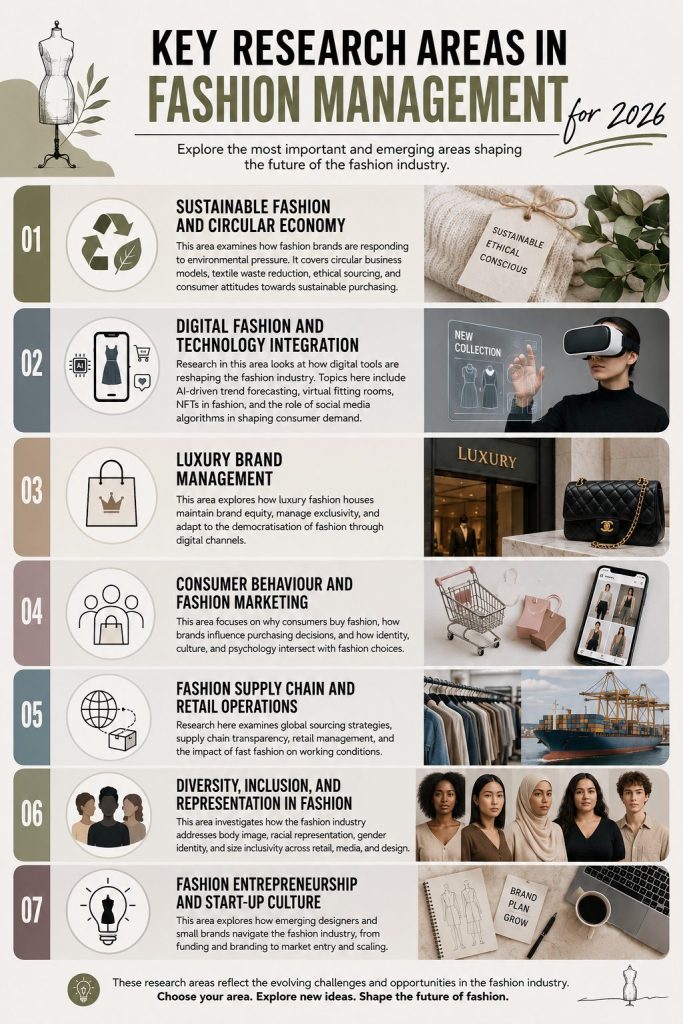
Fashion management research draws from a wide range of established academic domains. Understanding the key areas will help you identify where your interests lie and where genuine gaps in the literature exist.
Sustainable Fashion and Circular Economy This area examines how fashion brands are responding to environmental pressure. It covers circular business models, textile waste reduction, ethical sourcing, and consumer attitudes towards sustainable purchasing.
Digital Fashion and Technology Integration Research in this area looks at how digital tools are reshaping the fashion industry. Topics here include AI-driven trend forecasting, virtual fitting rooms, NFTs in fashion, and the role of social media algorithms in shaping consumer demand.
Luxury Brand Management This area explores how luxury fashion houses maintain brand equity, manage exclusivity, and adapt to the democratisation of fashion through digital channels.
Consumer Behaviour and Fashion Marketing This area focuses on why consumers buy fashion, how brands influence purchasing decisions, and how identity, culture, and psychology intersect with fashion choices.
Fashion Supply Chain and Retail Operations Research here examines global sourcing strategies, supply chain transparency, retail management, and the impact of fast fashion on working conditions.
Diversity, Inclusion, and Representation in Fashion This area investigates how the fashion industry addresses body image, racial representation, gender identity, and size inclusivity across retail, media, and design.
Fashion Entrepreneurship and Start-up Culture This area explores how emerging designers and small brands navigate the fashion industry, from funding and branding to market entry and scaling.
Five Example Dissertation Topics With Research Aims and Objectives
The following examples are designed to help you understand how a dissertation topic is structured at an academic level. Each includes a research aim and two to three objectives.
Example 1: Sustainable Fashion Consumption
Topic: How do sustainability certifications influence purchasing decisions among Gen Z fashion consumers in the United Kingdom?
Research Aim: To examine the extent to which sustainability labels and certifications affect the buying behaviour of Gen Z consumers in the UK fashion market.
Research Objectives:
- To review academic literature on consumer responses to sustainability labelling in the fashion industry
- To assess how Gen Z consumers in the UK perceive and interpret sustainability certifications when making purchase decisions
- To identify the barriers that prevent sustainability-conscious consumers from acting on their values
Example 2: AI in Fashion Retail
Topic: Evaluating the effectiveness of AI-powered personalisation tools in improving customer retention in online fashion retail.
Research Aim: To investigate how artificial intelligence personalisation technologies influence customer loyalty within e-commerce fashion platforms.
Research Objectives:
- To explore existing research on AI applications in fashion retail personalisation
- To compare customer retention rates before and after the implementation of AI tools in selected fashion e-commerce platforms
- To identify customer attitudes towards AI-driven product recommendations in fashion contexts
Example 3: Luxury Brand Positioning
Topic: How do European luxury fashion brands maintain brand exclusivity while expanding their digital presence?
Research Aim: To analyse the strategies used by luxury fashion brands to preserve brand equity during digital expansion.
Research Objectives:
- To examine theoretical frameworks for luxury brand management in digital environments
- To analyse case studies of European luxury brands that have launched digital campaigns
- To assess consumer perceptions of luxury brand value after digital channel expansion
Example 4: Fast Fashion Ethics
Topic: The impact of fast fashion business models on garment workers in South Asian supply chains: A case study approach.
Research Aim: To critically examine how fast fashion supply chain practices affect the working conditions of garment workers in Bangladesh and Pakistan.
Research Objectives:
- To review international labour standards and their application in South Asian garment manufacturing
- To investigate how fast fashion brands report and manage supply chain responsibility
- To evaluate the effectiveness of third-party auditing in improving working conditions
Example 5: Inclusive Fashion Design
Topic: Exploring the role of inclusive sizing strategies in shaping brand loyalty among plus-size fashion consumers.
Research Aim: To understand how fashion brands that adopt inclusive sizing practices influence the purchasing loyalty of plus-size consumers.
Research Objectives:
- To review academic literature on body positivity movements and their influence on fashion retail
- To assess how plus-size consumers perceive brand authenticity in inclusive sizing campaigns
- To examine the commercial outcomes for fashion brands that have expanded their size range
80 Fashion Management Dissertation Topics for 2026
The following topics are organised under meaningful subfield headings. They are numbered in fixed ranges and are suitable for undergraduate, master’s, and PhD-level research proposals.
Sustainable Fashion and Circular Economy
- Examining consumer willingness to pay a premium for certified sustainable fashion in European markets
- Circular economy adoption in UK fashion retail: barriers, drivers, and business outcomes
- The effectiveness of take-back programmes in reducing textile waste among fast fashion consumers
- How transparency in sustainable supply chains affects brand trust among millennial consumers
- Comparing carbon footprint reporting standards across global fashion brands: a critical analysis
- The role of rental fashion platforms in promoting circular consumption among urban consumers
- Greenwashing in fashion marketing: identifying false sustainability claims and their impact on consumer trust
- How fashion brands in Scandinavia have embedded sustainability into their core business models
- The influence of eco-labels on purchase intention among ethically motivated fashion consumers
- Material innovation and biodegradable textiles: adoption challenges within mainstream fashion retail
Digital Fashion, Technology and Innovation
- The role of augmented reality fitting tools in reducing product return rates in online fashion retail
- Evaluating the impact of artificial intelligence on seasonal trend forecasting accuracy in fashion management
- How fashion brands are using NFTs to create digital exclusivity and new revenue streams
- Consumer acceptance of virtual fashion items in metaverse environments: a generational study
- The influence of algorithm-driven content on fashion consumption habits among social media users
- Blockchain technology as a tool for improving supply chain transparency in luxury fashion
- How chatbot technology is reshaping customer service experiences in fashion e-commerce
- The use of big data analytics in inventory management within mid-market fashion retailers
- Digital fashion weeks and their impact on brand visibility and consumer engagement
- The relationship between influencer marketing automation and brand authenticity in fashion
Consumer Behaviour and Fashion Psychology
- The role of social identity in shaping fashion consumption patterns among university students
- How fashion advertising shapes body image perceptions among teenage consumers in the UK
- Examining the relationship between fast fashion addiction and compulsive buying behaviour
- Cross-cultural differences in fashion consumption values between UK and East Asian consumers
- The influence of celebrity endorsement on luxury fashion purchasing decisions among millennials
- How nostalgia marketing affects consumer attachment to heritage fashion brands
- Exploring the relationship between fashion brand values and consumer self-concept alignment
- The role of peer influence on fashion decision-making among Generation Z consumers in the UK
- How social comparison on Instagram affects fashion spending behaviour among young adults
- Examining the gap between pro-environmental attitudes and sustainable fashion purchasing behaviour
Luxury Brand Management and Positioning
- How European luxury fashion houses are adapting their exclusivity strategies for digital consumers
- The impact of collaborations between luxury and streetwear brands on brand perception
- Managing brand heritage in the age of social media: a case study of legacy French fashion houses
- How luxury fashion brands balance global standardisation with local market adaptation
- The role of scarcity marketing in maintaining desirability among luxury fashion consumers
- Celebrity brand partnerships in luxury fashion: measuring their effect on brand equity
- How second-hand luxury fashion platforms are disrupting traditional luxury retail models
- The impact of counterfeiting on luxury fashion brand perception and consumer trust
- Exploring how luxury fashion brands communicate craftsmanship values to digital-native consumers
- The effect of sustainability repositioning on brand loyalty within the luxury fashion sector
Fashion Marketing, Branding and Communication
- The effectiveness of user-generated content in building fashion brand communities online
- How fashion brands use storytelling to build emotional connections with target consumers
- Examining the shift from traditional advertising to content marketing in mid-market fashion
- The role of inclusive advertising campaigns in improving brand image among diverse consumer groups
- How fashion brands are navigating cancel culture and public relations crises on social media
- Measuring the return on investment of Instagram fashion campaigns for small and emerging brands
- The influence of TikTok trend culture on demand forecasting for fashion retailers
- How fashion subscription boxes create customer loyalty through personalisation and curation
- The use of sensory marketing strategies in physical fashion retail environments
- Evaluating the impact of ethical branding on consumer purchasing behaviour in the sportswear sector
Fashion Supply Chain, Operations and Retail Management
- The impact of nearshoring strategies on supply chain resilience in the European fashion industry
- How post-pandemic disruptions have reshaped global sourcing decisions for UK fashion retailers
- The role of ethical auditing in improving labour standards across South Asian garment supply chains
- Examining the relationship between supply chain transparency and consumer purchasing confidence
- How inventory management technology is reducing overproduction in fast fashion retail
- The challenges of implementing fair trade principles within large-scale fashion supply chains
- The impact of rising raw material costs on pricing strategies among UK high street fashion brands
- How fashion retailers are responding to the shift from physical to online retail environments post-2020
- Evaluating the use of predictive analytics in reducing unsold stock within fashion retail
- The role of last-mile delivery innovation in shaping customer satisfaction in fashion e-commerce
Diversity, Inclusion and Representation in Fashion
- The representation of racial diversity in UK fashion advertising: a content analysis from 2018 to 2024
- How body-positive fashion campaigns influence self-esteem and purchasing behaviour among women
- Exploring the rise of gender-neutral fashion collections and their reception among mainstream consumers
- Inclusive sizing in fashion retail: examining the gap between brand promises and product availability
- The role of disability representation in fashion media and its impact on consumer brand perception
- How LGBTQ+ inclusive marketing strategies influence brand loyalty among queer fashion consumers
- Examining ageism in fashion advertising and its effects on the purchasing behaviour of consumers over 50
- Representation of South Asian identity in British fashion media: progress, gaps, and implications
- How fashion brands are embedding diversity and inclusion into their corporate governance strategies
- The relationship between diverse runway representation and consumer brand trust in luxury fashion
Fashion Entrepreneurship and Emerging Business Models
- The challenges facing independent fashion designers when scaling from direct-to-consumer to wholesale
- How fashion start-ups use social commerce to build brand awareness without traditional advertising budgets
- Examining the business model viability of slow fashion brands in a fast-fashion-dominated market
- The role of crowdfunding platforms in supporting sustainable fashion entrepreneurship
- How fashion incubators and accelerators support emerging designers in the United Kingdom
- Examining the role of personal branding in the commercial success of independent fashion designers
- The impact of pop-up retail strategies on brand awareness and customer acquisition for new fashion businesses
- How digital marketplaces like Depop and Vinted are enabling fashion micro-entrepreneurship among young adults
- The role of fashion weeks in providing market access for emerging designers from non-Western countries
- Exploring funding barriers faced by fashion entrepreneurs from underrepresented communities in the UK
How to Select the Right Topic From This List
Looking through 80 fashion management research proposal ideas can feel overwhelming at first. A simple approach is to read through all the subheadings first, identify the two or three areas that interest you most, and then read only the topics within those sections.
Once you have a shortlist of five or six topics, ask yourself three questions. First, is there enough published academic literature on this topic? Second, can you realistically collect data or access enough secondary sources? Third, does this topic align with your academic level and course requirements?
If you answer yes to all three, you are likely looking at a viable research topic. If you are still unsure, seeking dissertation topics in fashion management guidance from your supervisor or a professional academic service is always a sensible next step.
Conclusion
Selecting a dissertation topic is not simply a formality. It is the foundation on which your entire research project is built. In a field as dynamic and competitive as fashion management, choosing a topic that is both academically rigorous and practically relevant will set your dissertation apart.
This post has provided you with a broad understanding of the key research areas in fashion management, a set of example topics with aims and objectives, and 80 unique, original fashion management dissertation ideas designed for 2026-level academic expectations.
The most important thing to remember is that no topic is perfect from the outset. Your research question will evolve as you engage with the literature and refine your thinking. What matters most is that you begin with a clear direction, a genuine interest in your subject area, and a commitment to producing research that contributes meaningfully to the field.
Approach your dissertation with curiosity, not anxiety. Use the resources available to you, including your supervisor, academic librarians, and professional dissertation support services. You are more capable than you think, and the right topic is closer than it feels.
