


Behavioural Finance Dissertation Topics for 2026

When students start their final year, the pressure to choose a perfect research title can feel overwhelming. Many students turn to academic forums and student discussion platforms to find inspiration. Here are the most common questions gathered from those communities regarding topic selection this year:
- How can I find a behavioural finance topic that is narrow enough for a Master’s project?
- What are the most relevant research topics in behavioural finance for PhD candidates in 2026?
- How has social media influenced herding behaviour in the UK stock market recently?
- Are there specific behavioural finance dissertation topics for undergraduate students that don’t require complex coding?
- Where can I find a behavioural finance dissertation topics pdf to help me structure my initial proposal?
Selecting a high-quality dissertation topic is the most critical step in your academic journey. In the field of behavioural finance, your choice demonstrates your ability to bridge the gap between traditional economic models and the messy reality of human psychology. As markets become more volatile and technology-driven, understanding why investors make “irrational” choices is more academically significant than ever. This guide moves you from a broad interest to a refined research title that meets the expectations of your university supervisors.
Why Choosing the Right Dissertation Topic Matters
Your dissertation is a demonstration of your expertise in a niche area rather than just a final hurdle. In behavioural finance, choosing a modern topic allows you to challenge the Efficient Market Hypothesis using real-world data from 2026. A well-chosen topic shows that you can apply psychological concepts like loss aversion or overconfidence to current market anomalies. This alignment with modern trends makes your research more valuable to both academic reviewers and future employers in the financial sector.
Download Behavioural Finance Dissertation Topics PDF
To assist you further in your research journey, we offer a curated collection of topics in a convenient format. Students can receive a downloadable PDF containing a personalised list of dissertation topics curated by academic experts. This resource is designed to simplify your initial brainstorming phase and provide a professional framework for your formal research proposal. By completing a short form with your specific area of interest and academic level, you gain access to a structured document that helps you compare different research directions.
Key Research Areas in Behavioural Finance
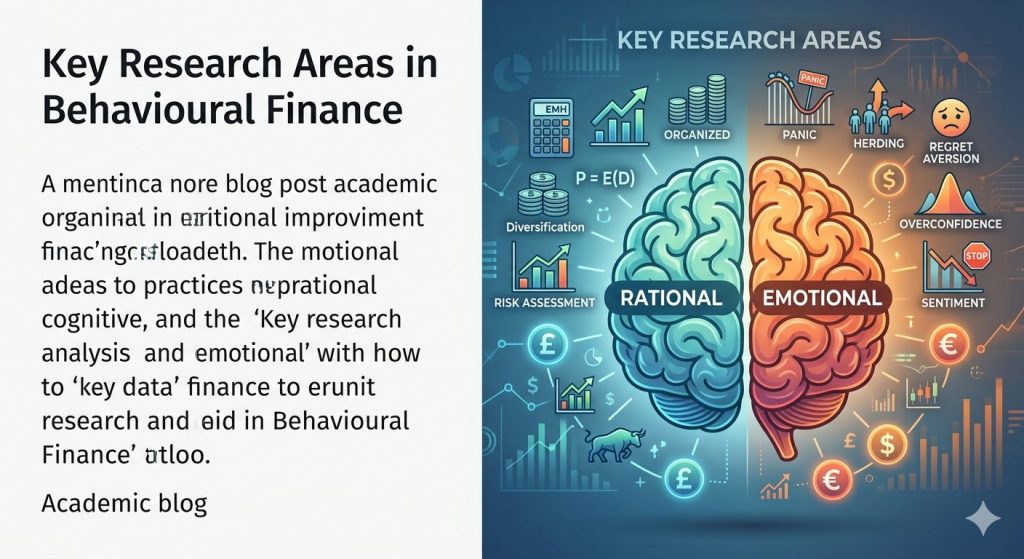
Before diving into specific titles, it is helpful to understand the primary domains that currently define the field. Research in 2026 is largely focused on how digital interfaces and rapid information cycles alter human decision-making.
- Cognitive Biases: Investigating how mental shortcuts, or heuristics, lead to systematic errors in financial judgment.
- Emotional Finance: Exploring how feelings like anxiety, regret, and excitement drive market cycles and individual portfolio choices.
- Social and Herding Behaviour: Analysing how digital communities and social influencers create collective bubbles or crashes.
- Neurofinance: Using biological and neurological data to understand the physical processes behind risk-taking and reward-seeking.
- Digital and Crypto-Behaviour: Studying the unique psychological triggers present in decentralised finance and high-frequency trading environments.
Structured Examples of Behavioural Finance Topics
To help you understand the academic depth required, here are five examples with clear aims and objectives.
1. The Impact of Gamification on Retail Investor Risk-Taking
- Research Aim: To evaluate how mobile trading app interfaces influence the risk-taking levels of Gen Z investors in the UK.
- Research Objectives:
- To identify specific gamification features used in popular UK trading platforms.
- To measure the correlation between app notifications and the frequency of high-risk trades.
2. Overconfidence Bias in Cryptocurrency Day Trading
- Research Aim: To investigate whether frequent trading in the Bitcoin market is driven by overconfidence among non-professional investors.
- Research Objectives:
- To assess the self-reported confidence levels of traders compared to their actual annual returns.
- To determine if historical bull market success increases the likelihood of future overconfident trading errors.
3. Mental Accounting and Post-Pandemic Savings Habits
- Research Aim: To explore how UK households categorise emergency funds versus discretionary spending in a high-inflation environment.
- Research Objectives:
- To analyse the psychological boundaries students place between different digital saving pots.
- To examine how inflation-driven anxiety alters traditional mental accounting rules.
4. Herding Behaviour in Sustainable Investing (ESG)
- Research Aim: To determine if the rise in Green Finance is driven by fundamental value or social conformity among institutional investors.
- Research Objectives:
- To track the flow of capital into ESG funds following major climate policy announcements.
- To identify if fund managers follow peer movements regardless of individual firm performance.
5. Loss Aversion and Property Market Stagnation
- Research Aim: To study how the fear of selling at a loss impacts residential property liquidity during interest rate hikes.
- Research Objectives:
- To compare listing prices with actual market valuations in the London housing market.
- To measure the duration of time properties stay on the market when sellers face a nominal loss.
80 Unique Behavioural Finance Dissertation Topics for 2026
Cognitive Biases in Financial Decision-Making
- The role of anchoring bias in setting initial public offering price expectations.
- How the availability heuristic influences individual perceptions of stock market crashes.
- Impact of the representativeness heuristic on the selection of winning mutual funds.
- Investigating the disposition effect among retail traders in the London Stock Exchange.
- The influence of confirmation bias on investor reactions to negative corporate news.
- Hindsight bias and its effect on the evaluation of past investment performance.
- The impact of the framing effect on the choice of retirement savings plans.
- How status quo bias prevents optimal portfolio rebalancing in long-term investments.
- Analysis of the endowment effect in the valuation of non-fungible tokens.
- Behavioural finance dissertation topics undergraduate students can use to study small-scale local investment clubs.
Herding Behaviour and Social Influences
- The influence of FinTok influencers on the trading volume of meme stocks in 2026.
- Social media sentiment analysis as a predictor of short-term price movements in tech stocks.
- Herding behaviour in the UK commercial real estate market during economic shifts.
- The role of online investment forums in creating speculative bubbles in penny stocks.
- Peer pressure and its impact on the adoption of high-risk financial products among students.
- Measuring the FOMO effect on initial coin offerings.
- How collective panic spreads through digital banking apps during liquidity scares.
- The impact of celebrity endorsements on the perceived legitimacy of new FinTech startups.
- Social conformity and the standardisation of corporate ESG reporting practices.
- A behavioral finance dissertation topic in the UK focusing on the Reddit effect on FTSE 100 volatility.
Emotional Finance and Risk Perception
- The relationship between investor anxiety and the demand for safe haven assets like gold.
- How regret aversion leads to the omission bias in long-term wealth management.
- The role of investor mood measured by weather or sporting events on market returns.
- Impact of financial burnout on the decision-making quality of professional fund managers.
- The psychology of revenge trading following significant capital losses in volatile markets.
- How excitement and dopamine hits influence high-frequency trading in the UK.
- The effect of domestic political uncertainty on the risk appetite of retail investors.
- Examining the ostrich effect in household debt management during a cost-of-living crisis.
- Trust in AI: How emotional attachment to automated advisors affects portfolio stickiness.
- Using a behavioural finance dissertation topics pdf to map out the emotional stages of a market cycle.
Mental Accounting and Personal Finance
- How digital pocket features in banking apps alter consumer spending discipline.
- The psychological impact of Buy Now Pay Later schemes on debt perception.
- Mental accounting and the treatment of tax refunds versus earned income.
- The windfall effect: How unexpected bonuses are spent differently than regular salary.
- The role of mental budgeting in the financial planning of self-employed gig workers.
- How parents categorise university savings versus general household wealth.
- The psychology behind the pain of paying in cashless versus cash-based societies.
- Impact of inflation on the mental value of fixed-income savings accounts.
- Mental accounting and the diversification of crypto-assets versus traditional stocks.
- Comprehensive behavioural finance dissertation topics 2026 for Master’s students studying digital banking.
Overconfidence and Market Anomalies
- Gender differences in overconfidence and its impact on stock turnover rates.
- The illusion of control in sports betting versus stock market investing.
- How professional experience moderates overconfidence bias in institutional traders.
- The impact of the January Effect through the lens of investor psychology.
- Overreaction and underreaction: Analysing the momentum anomaly in 2026 markets.
- The small-firm effect: Is it a fundamental risk or a behavioural preference?
- How the self-attribution bias leads to excessive trading among successful investors.
- The role of narcissism in the financial reporting and aggressive growth of CEOs.
- Investigating the home bias in the portfolio selection of UK-based investors.
- Specific dissertation topics in behavioral finance for a PhD project exploring algorithmic bias.
Behavioural Finance in the Age of AI and FinTech
- The algorithm aversion paradox: Why investors trust humans over more accurate AI.
- How robo-advisors can be designed to nudge users toward better saving habits.
- The impact of real-time push notifications on the impulsive selling of stocks.
- Behavioural biases in the valuation of AI-driven startups by venture capitalists.
- Trust and transparency: How blockchain interfaces affect the perceived safety of assets.
- The role of dark patterns in trading apps in exploiting cognitive weaknesses.
- Behavioural responses to flash crashes in automated high-frequency environments.
- How AI-generated financial advice alters the authority bias of retail clients.
- The impact of virtual reality financial simulations on investor education.
- Identifying research topics in Behavioural finance for PhD candidates focused on machine learning.
Corporate Behavioural Finance
- The impact of CEO overconfidence on corporate merger and acquisition failures.
- How board of directors’ groupthink influences long-term capital structure decisions.
- The role of narrow framing in corporate risk management and insurance choices.
- Behavioural factors in the timing of stock repurchases by major UK firms.
- The influence of recency bias on corporate earnings forecasts by financial analysts.
- How loss aversion prevents companies from divesting from failing business units.
- The psychological drivers of greenwashing in corporate environmental reporting.
- Managerial hubris and its correlation with dividend policy changes.
- The impact of employee optimism bias on the take-up of company share schemes.
- Many students use an Online Dissertation Writing Service to help structure their research into corporate governance.
Niche Markets: Crypto, NFTs, and ESG
- The gambler’s fallacy in the prediction of cryptocurrency price corrections.
- Psychological barriers to the adoption of Central Bank Digital Currencies.
- The role of social identity in the holding of specific NFT collections.
- Behavioural biases in the pricing of carbon credits in voluntary markets.
- The halo effect in the valuation of companies with high social responsibility scores.
- How moral licensing affects the ethical investment choices of wealthy individuals.
- The impact of narrative fallacy in the marketing of sustainable energy stocks.
- Examining the affect heuristic in the investment of luxury physical assets.
- Behavioural drivers of liquidity in decentralised finance lending pools.
- Selecting dissertation topics in behavioral finance for my Masters research on ethical banking.
Conclusion
The study of behavioural finance in 2026 offers a unique opportunity to explore the intersection of technology, psychology, and global economics. By choosing a topic that focuses on specific cognitive biases or the influence of new digital platforms, you can produce research that is both academically significant and practically relevant. Remember that a successful dissertation starts with a narrow, researchable question and a commitment to academic integrity. Whether you are an undergraduate exploring herding behaviour or a PhD candidate investigating neurofinance, your contribution will help refine our understanding of the human element in the financial world. Approach your research with curiosity, stay grounded in established methodology, and use the resources available to you to build a project that stands out.
