


Dark Tourism Dissertation Topics for 2026

Questions Students Are Asking About Dark Tourism Dissertations
The questions below were gathered from student forums, Reddit academic threads, and university discussion boards. They reflect the real concerns students have when choosing a dissertation topic in this field.
- What are the most relevant dark tourism dissertation topics for 2026?
- How do I find the right dissertation topic in dark tourism that fits my academic level?
- Are there dark tourism thesis topics for the UK that align with current research trends?
- What makes a dark tourism research proposal idea strong enough for an undergraduate student?
- Can I find a dark tourism dissertation topics PDF with \expert-curated suggestions?
- Which dark tourism project topics work best for a PhD dissertation?
- How do I narrow down dark tourism research topics without losing academic focus?
These questions are common, and this post answers all of them clearly and directly.
Why Choosing the Right Dissertation Topic in Dark Tourism Matters
Dark tourism, as a field of academic inquiry, sits at the intersection of history, ethics, psychology, heritage studies, and tourism management. It examines how and why people visit sites associated with death, tragedy, suffering, and disaster. Choosing the right dissertation topic in dark tourism is not simply a procedural step. It defines the depth of your research, the relevance of your contribution, and the strength of your academic argument.
Students often struggle with this choice because dark tourism is both emotionally charged and academically complex. The wrong topic can leave you with insufficient literature, unclear methodology, or ethical complications that are difficult to manage at undergraduate or master’s level. A well-chosen topic, on the other hand, positions you within current scholarly debates and allows you to produce original, meaningful research.
If you are feeling overwhelmed by the options available, you are not alone. Many students benefit from online dissertation help at this stage to clarify their ideas, align them with academic expectations, and move forward with confidence.
Download Dark Tourism Dissertation Topics PDF
Students who want a personalised list of dissertation topics curated by academic experts can access a downloadable PDF resource. This PDF is produced by specialists in tourism, heritage, and social sciences, and it is tailored to reflect current research priorities in 2026.
The resource is available after completing a short academic intake form. The form allows experts to understand your research level, area of interest within dark tourism, and any institutional guidelines you need to follow. The topics provided are specific, researchable, and appropriately scoped for undergraduate, master’s, or doctoral work.
Heritage and Memorialisation This area examines how sites of tragedy are preserved, interpreted, and presented to visitors. It includes war memorials, genocide museums, and concentration camps.
Key Research Areas in Dark Tourism Students Can Explore
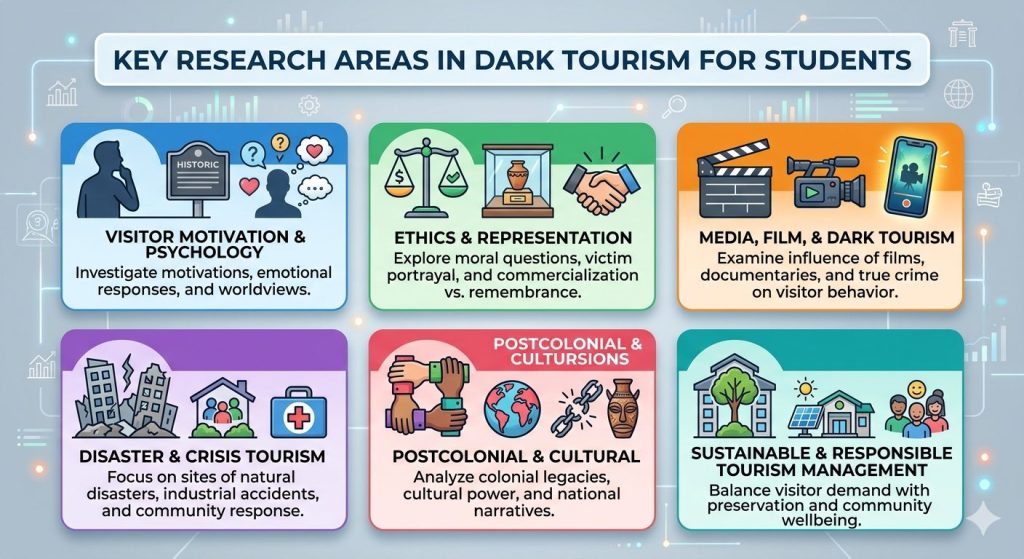
Dark tourism encompasses a wide range of academic subfields. Understanding these areas helps students identify where their interests and skills align most naturally.
Visitor Motivation and Psychology Researchers in this area investigate why people choose to visit sites of death or suffering, what emotional responses they experience, and how these visits affect their worldviews.
Ethics and Representation This subfield explores the moral questions surrounding dark tourism: who benefits, how victims are represented, and whether commercialisation undermines remembrance.
Media, Film, and Dark Tourism An emerging research direction that examines how films, documentaries, and true crime media influence visitor behaviour and site popularity.
Disaster and Crisis Tourism This area focuses on sites affected by natural disasters, industrial accidents, or humanitarian crises, and how communities respond to visitor interest.
Postcolonial and Cultural Dimensions Researchers examine how dark tourism sites reflect colonial legacies, cultural power dynamics, and national narratives.
Sustainable and Responsible Tourism Management This area addresses how dark tourism sites can be managed to balance visitor demand with site preservation and community wellbeing.
Five Example Dissertation Topics With Aims and Objectives
Understanding how to structure a dissertation topic is as important as selecting one. The following examples demonstrate how a strong research topic is developed at academic level.
Example 1: Visitor Motivation at Holocaust Memorial Sites
Research Aim: To examine the psychological motivations driving visitors to Holocaust memorial sites in Europe and their reported emotional outcomes.
Research Objectives:
- To identify the primary motivational factors that lead tourists to visit Holocaust memorials
- To analyse the emotional and cognitive responses reported by visitors after their experience
- To assess whether visitor motivations differ across age groups and nationalities
Example 2: Ethical Management of Disaster Tourism Sites
Research Aim: To evaluate the ethical frameworks currently used by site managers at disaster tourism locations and their alignment with international heritage guidelines.
Research Objectives:
- To review existing ethical guidelines applied to disaster tourism management globally
- To compare management approaches at three disaster tourism sites across different countries
- To identify gaps between institutional guidelines and actual site management practice
Example 3: Social Media’s Influence on Dark Tourism Site Popularity
Research Aim: To investigate how social media content shapes visitor interest in dark tourism destinations among Generation Z travellers.
Research Objectives:
- To analyse the type of dark tourism content most frequently shared on social media platforms
- To assess the relationship between social media exposure and site visitation decisions among 18 to 25-year-olds
- To explore whether social media engagement raises or undermines ethical awareness among potential visitors
Example 4: Postcolonial Narratives in Slavery Heritage Tourism
Research Aim: To critically examine how plantation tourism sites in the American South construct and present narratives of slavery for contemporary visitors.
Research Objectives:
- To identify the interpretive strategies used at selected plantation tourism sites
- To evaluate how these narratives reflect or resist postcolonial frameworks
- To assess the perspectives of African American visitors regarding authenticity and representation
Example 5: Dark Tourism and Community Identity in Post-Conflict Zones
Research Aim: To explore how communities in post-conflict regions use dark tourism to reconstruct local identity and promote reconciliation.
Research Objectives:
- To examine how dark tourism contributes to community narrative-building in post-conflict settings
- To identify the tensions between economic benefit and emotional burden for host communities
- To evaluate the long-term social impact of dark tourism development on community cohesion
80 Dark Tourism Dissertation Topics for 2026
The following topics are organised by research subfield and numbered clearly for easy reference. Each topic is narrow in scope, academically credible, and suitable for undergraduate, master’s, or PhD research.
Visitor Psychology and Motivation in Dark Tourism
- How does prior knowledge of a tragedy influence emotional responses among visitors to dark tourism sites?
- What role does empathy play in shaping the dark tourism experience at genocide memorials?
- How do cultural backgrounds affect visitor interpretation of suffering at concentration camp sites?
- To what extent do personal grief experiences shape individual motivations for dark tourism visits?
- How do dark tourism experiences affect the long-term moral reasoning of young adult visitors?
- What psychological factors distinguish educational visitors from sensation-seeking tourists at disaster sites?
- How do visitors process conflicting emotions of guilt and curiosity during dark tourism experiences?
- What is the relationship between visitor expectations and satisfaction at sites of mass atrocity?
- How does group travel versus solo travel affect the emotional processing of dark tourism experiences?
- In what ways does visitor dwell time at dark tourism sites correlate with depth of emotional engagement?
Ethics, Representation, and Authenticity
- How do site managers balance commercial viability and ethical responsibility at dark tourism destinations?
- What ethical tensions arise when victims’ families oppose the development of memorial tourism at tragedy sites?
- How is authenticity constructed and contested at reconstructed dark tourism sites?
- To what extent does commodification of suffering undermine the educational value of dark tourism?
- How do museum curators navigate ethical representation of genocide at heritage institutions?
- What role does survivor testimony play in shaping the ethical presentation of dark tourism narratives?
- How do tour operators justify profit-making at sites associated with human suffering?
- In what ways do national governments shape ethical frameworks for the management of dark heritage sites?
- How does the concept of “thanatourism” challenge conventional notions of ethical tourism behaviour?
- What are the responsibilities of travel bloggers and influencers when promoting dark tourism destinations?
War, Genocide, and Conflict Heritage
- How do battlefield tourism sites in northern France navigate the tension between remembrance and recreation?
- What role does dark tourism play in sustaining collective memory of the Rwandan genocide?
- How do visitors engage with conflicting national narratives at Cold War heritage sites in Eastern Europe?
- To what extent does dark tourism at Vietnam War sites reinforce or challenge American historical memory?
- How are sites of ethnic cleansing in the former Yugoslavia managed as dark tourism destinations?
- What factors influence repeat visitation to World War II concentration camp memorial sites?
- How do dark tourism sites in Cambodia memorialise the Khmer Rouge period for international visitors?
- In what ways do colonial-era massacre sites in Africa challenge the Western-centric dark tourism narrative?
- How do dark tourism experiences at nuclear test sites in Kazakhstan shape visitor understanding of Cold War politics?
- What is the relationship between dark tourism development and peacebuilding efforts in post-genocide societies?
Disaster and Industrial Accident Tourism
- How has the Chernobyl Exclusion Zone evolved as a dark tourism destination since 2019?
- What motivates tourists to visit areas affected by the 2011 Fukushima nuclear disaster?
- How do local communities in Bhopal, India perceive and manage industrial disaster tourism?
- In what ways does disaster tourism contribute to or hinder post-disaster community recovery?
- How are sites of natural disaster, such as earthquake zones, transformed into dark tourism destinations?
- What ethical frameworks guide the management of dark tourism at hurricane-affected coastal communities?
- How does the dark tourism industry in New Orleans use Hurricane Katrina in its visitor narratives?
- To what extent does dark tourism at industrial disaster sites provide educational value to visitors?
- How do government agencies regulate visitor access to active dark tourism disaster zones?
- What role does photography play in shaping visitor behaviour and ethical conduct at disaster tourism sites?
Crime, Prisons, and Execution Tourism
- How do prison tourism sites in the United Kingdom construct narratives of punishment and reform?
- What motivates visitors to former execution sites, and how does this reflect contemporary attitudes to capital punishment?
- How are serial killer tourism routes in the United States managed and marketed to visitors?
- To what extent does crime scene tourism contribute to the retraumatisation of victim communities?
- How do visitors engage with themes of guilt and justice at former apartheid detention sites in South Africa?
- What is the relationship between true crime media consumption and interest in crime-related dark tourism?
- How do UK prison museums balance historical education with the entertainment expectations of visitors?
- In what ways does ghost tourism intersect with crime heritage at Victorian-era prison sites?
- How do site managers at former death row facilities address the ethical display of execution methods?
- What role does dark tourism at Alcatraz play in shaping popular perceptions of the American justice system?
Media, Film, and Cultural Dark Tourism
- How does the Netflix documentary genre influence visitor decisions to travel to real-life dark tourism locations?
- In what ways has the television series “Chernobyl” (2019) altered visitor demographics at the Exclusion Zone?
- How does film-induced dark tourism affect local communities near shooting locations associated with tragedy?
- What role do video games set in historical conflict zones play in generating interest in dark tourism sites?
- How do true crime podcasts shape expectations among visitors to dark tourism destinations?
- To what extent does social media aestheticisation of dark tourism sites trivialise human suffering?
- How do visitors reconcile entertainment and education when visiting dark tourism sites featured in popular films?
- In what ways do travel influencers shape the ethical norms of dark tourism engagement among younger audiences?
- How is the dark tourism experience constructed differently in promotional content versus academic literature?
- What is the relationship between literary dark tourism and visitor interest in sites associated with tragic authors?
Slavery, Colonial, and Postcolonial Dark Tourism
- How do plantation museum tours in the American South represent the experiences of enslaved people?
- In what ways does dark tourism at transatlantic slave trade sites challenge Eurocentric heritage narratives?
- How do African governments manage colonial-era sites of suffering as dark tourism destinations?
- What role does diaspora tourism play in shaping visitor engagement with slavery heritage sites in the Caribbean?
- How do postcolonial frameworks inform the interpretation of dark tourism at indigenous massacre sites in Australia?
- In what ways does heritage tourism at colonial prisons in India reflect postcolonial nation-building narratives?
- How are the experiences of enslaved Africans represented in dark tourism offerings at Cape Coast Castle in Ghana?
- What tensions arise between local communities and international tourists at sites of colonial violence in Kenya?
- How does dark tourism at apartheid-era sites contribute to post-apartheid identity formation in South Africa?
- To what extent does dark tourism reinforce or deconstruct colonial power narratives at heritage sites globally?
Sustainable Management and Community Impact
- How do dark tourism site managers incorporate sustainability principles into visitor management strategies?
- What is the economic impact of dark tourism development on rural communities surrounding heritage sites?
- How do residents of dark tourism host communities perceive the commercialisation of local tragedy?
- In what ways can dark tourism support conservation goals at sites of environmental disaster?
- How do community-led dark tourism initiatives differ in outcome from government-managed heritage programmes?
- What strategies do site managers use to prevent visitor overcrowding at sensitive dark heritage locations?
- How does dark tourism development affect the psychological wellbeing of communities in post-conflict settings?
- In what ways does overtourism at dark heritage sites threaten the integrity of memorial spaces?
- How do dark tourism site operators engage with local schools and educational institutions to promote responsible visitation?
- What governance frameworks best support the sustainable development of dark tourism sites in low-income countries?
How to Choose the Right Dissertation Topic in Dark Tourism
Choosing among 80 options can feel as difficult as starting from scratch. A structured approach makes it much easier. Begin by identifying which subfield within dark tourism genuinely interests you. You will spend months researching and writing about this topic, so academic curiosity matters.
Next, consider your academic level. Undergraduate students typically need topics that are researchable within the available time and with accessible literature. Master’s students are expected to engage more deeply with theory and methodology. PhD candidates are required to offer an original contribution to knowledge, which means the topic must have a clear gap in current scholarship.
You should also assess data availability. Some dark tourism topics, such as those involving sensitive communities or restricted sites, may require ethical approvals that are difficult to obtain within standard dissertation timelines. Choosing a topic where data is accessible, whether through published studies, visitor surveys, or site observations, makes the research process significantly smoother.
Students pursuing dark tourism research proposal ideas for undergraduate students will find that topics in visitor psychology, media influence, and crime heritage are particularly well-suited to primary research methods such as surveys and interviews. These topics also tend to have a strong existing literature base.
Conclusion
Dark tourism is one of the most intellectually stimulating areas within tourism and heritage studies. It challenges students to think critically about how societies remember pain, represent suffering, and build meaning from tragedy. Selecting a dissertation topic in this field is not a trivial decision. It shapes the direction of your research, the strength of your methodology, and the contribution you make to academic knowledge.
The 80 topics presented in this post are designed to give you a strong starting point. They are grounded in current research directions, scoped appropriately for academic inquiry, and varied enough to suit different interests and levels of study. Whether you are developing dark tourism research topics for a master’s dissertation or identifying dark tourism project topics for a PhD dissertation, the key is to select a focus that is both personally meaningful and academically viable.
Approach your dissertation with curiosity, rigour, and a genuine commitment to ethical research. Dark tourism, by its very nature, demands that researchers treat their subject matter with care and respect. Students who bring both intellectual honesty and sensitivity to their work are the ones who produce research that genuinely advances the field.
