


Biochemistry Dissertation Topics for 2026

Questions Students Are Asking About Biochemistry Dissertations
The following questions have been gathered from student forums, academic discussion boards, and university help platforms. They reflect what students at undergraduate, master’s, and PhD level are genuinely searching for when planning their biochemistry research.
- What are the best biochemistry dissertation topics for 2026 that are still original?
- How do I choose a biochemistry dissertation topic that suits my academic level?
- Are there any latest biochemistry research topics related to clinical or medical applications?
- What makes a biochemistry thesis topic strong enough for a master’s or PhD proposal?
- Can I get biochemistry dissertation topics with examples so I understand how to frame my research aim?
- Which subfields in biochemistry are most active for student research right now?
- How do molecular biology dissertation topics differ from broader biology research areas?
- Where can I find biochemistry research topics for students that are both relevant and researchable?
Why Choosing the Right Biochemistry Dissertation Topic Matters
Choosing the right dissertation topic is one of the most important decisions you will make during your academic journey. In a discipline as broad and rapidly evolving as biochemistry, selecting a topic that is both academically sound and practically relevant can determine the success of your entire research project.
Biochemistry sits at the crossroads of biology, chemistry, and medicine. That means your topic must be precise enough to be manageable, yet broad enough to contribute meaningfully to existing scientific knowledge. A well-chosen topic allows you to demonstrate your understanding of biochemical pathways, molecular mechanisms, and research methodology in a way that satisfies your university’s academic standards.
Students who struggle with topic selection often feel overwhelmed by the sheer number of research possibilities available. If you are one of them, this post is designed to guide you through that process with clarity and confidence.
Download Biochemistry Dissertation Topics PDF
If you would prefer a curated list built around your specific academic level and research interests, a downloadable PDF is available. This resource is prepared by academic specialists with expertise in biochemistry research and dissertation writing. After completing a short online form, you will receive a personalised PDF containing dissertation topic suggestions matched to your course level and area of focus. This is a free resource designed to support your early-stage research planning.
Key Research Areas in Biochemistry Worth Exploring
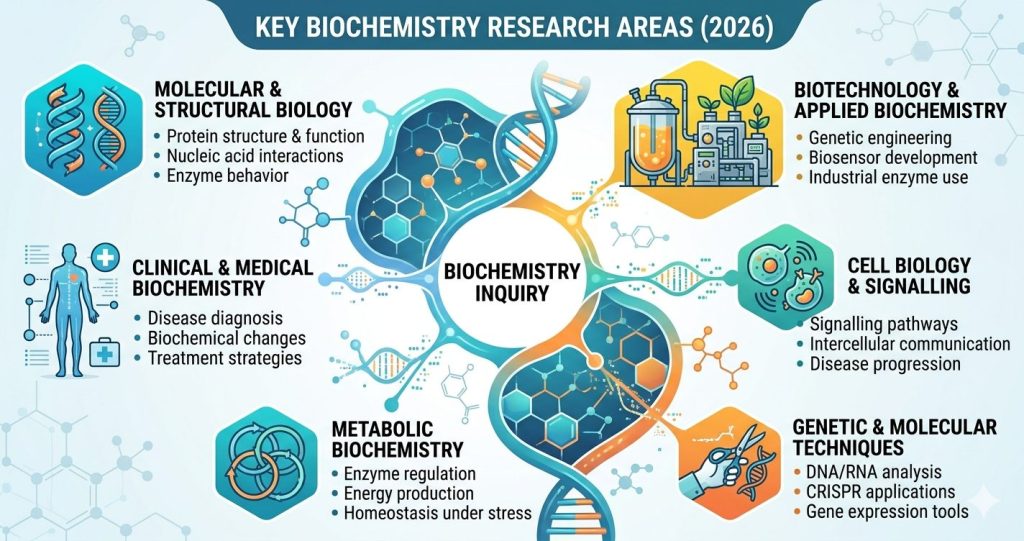
Before selecting a topic, it helps to understand where the field is currently heading. Biochemistry in 2026 spans a wide range of established and emerging research domains. The following areas are well-supported by existing academic literature and represent active zones of scientific inquiry.
Molecular and Structural Biology This area focuses on protein structure and function, nucleic acid interactions, and enzyme behaviour at the molecular level. Research in this domain often intersects with pharmaceutical development and disease modelling.
Clinical and Medical Biochemistry Clinical biochemistry examines how biochemical changes in the body relate to disease, diagnosis, and treatment. Topics in this area are particularly relevant for students aiming to work in healthcare or biomedical research.
Metabolic Biochemistry This subfield explores enzymes and metabolism, including how cells regulate energy production, respond to nutritional changes, and maintain homeostasis under stress conditions.
Genetic and Molecular Techniques Topics here deal with DNA and RNA analysis, gene expression, CRISPR applications, and the tools used to study genetic information at the cellular and molecular level.
Biotechnology and Applied Biochemistry This area bridges laboratory science with real-world applications. It includes topics in genetic engineering, biosensor development, industrial enzyme use, and pharmaceutical manufacturing.
Cell Biology and Signalling Cell signalling pathways and intercellular communication are critical to understanding disease progression, immune response, and developmental biology. These topics suit students interested in translational research.
Five Biochemistry Dissertation Topic Examples With Aims and Objectives
Understanding how to structure a dissertation topic academically is just as important as choosing one. The following examples demonstrate how to move from a broad idea to a focused, researchable topic with clear academic direction.
Example 1 — Enzyme Activity and Metabolic Disorders
Topic: The Role of Hexokinase Enzyme Activity in Glucose Metabolism Dysregulation Among Type 2 Diabetic Patients
Research Aim: To investigate how altered hexokinase activity contributes to impaired glucose metabolism in individuals diagnosed with type 2 diabetes.
Research Objectives:
- To analyse hexokinase activity levels in blood samples from type 2 diabetic and non-diabetic participants
- To compare the correlation between hexokinase dysfunction and blood glucose regulation markers
- To evaluate potential biochemical targets for therapeutic intervention based on enzyme activity data
Example 2 — Protein Misfolding and Neurodegeneration
Topic: Biochemical Mechanisms of Amyloid-Beta Protein Misfolding in Early-Onset Alzheimer’s Disease
Research Aim: To examine the molecular events leading to amyloid-beta aggregation and its role in early neurodegeneration.
Research Objectives:
- To review existing biochemical models of amyloid-beta misfolding and plaque formation
- To assess how oxidative stress contributes to protein structural changes in neuronal tissue
- To identify biochemical markers that may serve as early diagnostic indicators
Example 3 — CRISPR Applications in Genetic Disease
Topic: Evaluating the Efficacy of CRISPR-Cas9 Gene Editing in Correcting Sickle Cell Anaemia Mutations at the Molecular Level
Research Aim: To assess the precision and safety of CRISPR-Cas9 as a molecular tool for correcting haemoglobin gene mutations associated with sickle cell anaemia.
Research Objectives:
- To review current clinical trial data on CRISPR applications in haemoglobinopathies
- To analyse off-target mutation risks associated with Cas9-guided gene editing
- To compare CRISPR outcomes with conventional gene therapy approaches in terms of biochemical restoration
Example 4 — Drug Metabolism and Pharmacogenomics
Topic: The Influence of CYP450 Enzyme Polymorphisms on Drug Metabolism Variability in Adult Cancer Patients
Research Aim: To investigate how genetic variations in cytochrome P450 enzymes affect drug metabolism rates and therapeutic outcomes in oncology patients.
Research Objectives:
- To identify common CYP450 polymorphisms associated with altered drug clearance rates
- To evaluate the clinical implications of metabolic variability for personalised chemotherapy dosing
- To propose a biochemical framework for pharmacogenomic screening in cancer care
Example 5 — Microbiome and Biochemical Health
Topic: Gut Microbiome Composition and Its Biochemical Influence on Inflammatory Bowel Disease Progression
Research Aim: To explore how shifts in gut microbiome diversity alter metabolic by-products and contribute to the biochemical environment driving inflammatory bowel disease.
Research Objectives:
- To map microbial community changes in IBD patients using metagenomic sequencing data
- To analyse short-chain fatty acid production as a biochemical marker of microbiome health
- To assess the relationship between microbiome-derived metabolites and intestinal inflammation pathways
80 Biochemistry Dissertation Topics for 2026
The following topics have been carefully selected to reflect current and emerging research in biochemistry. They are organised by subfield, appropriately scoped for dissertation-level research, and suitable for undergraduate, master’s, and PhD proposals. Students who need personalised guidance on any of these areas can explore online dissertation help to refine their topic and develop a strong research proposal.
Enzymes, Metabolism, and Metabolic Disorders
- The role of pyruvate kinase isoforms in cancer cell metabolic reprogramming
- Allosteric regulation of phosphofructokinase and its implications for glycolytic flux in skeletal muscle
- Biochemical alterations in mitochondrial enzyme activity during early-stage type 2 diabetes
- Acetyl-CoA carboxylase inhibition as a biochemical strategy for non-alcoholic fatty liver disease
- Comparative analysis of lipase activity across dietary intervention groups in obese adults
- Metabolic enzyme dysregulation in polycystic ovary syndrome at the biochemical level
- Enzymatic basis of reactive oxygen species accumulation in cardiac ischaemia-reperfusion injury
- The biochemical relationship between succinate dehydrogenase mutations and hereditary paraganglioma
- Kinetic modelling of branched-chain amino acid catabolism in maple syrup urine disease
- How altered adenylate kinase activity impacts cellular energy homeostasis in ageing muscle tissue
Protein Structure, Function, and Disease
- Post-translational modifications of tau protein in frontotemporal dementia progression
- Structural consequences of point mutations in collagen alpha chains in osteogenesis imperfecta
- Biochemical characterisation of heat shock protein responses during cellular oxidative stress
- The molecular basis of prion protein misfolding and its propagation in neuronal tissue
- Ubiquitin-proteasome pathway dysfunction and its contribution to Parkinson’s disease pathology
- Conformational changes in haemoglobin variants and their effects on oxygen-binding capacity
- Structural analysis of aquaporin channel proteins in chronic kidney disease
- Protein glycation in hyperglycaemia and its biochemical link to diabetic nephropathy
- Comparative proteomics of secreted proteins in benign versus malignant breast tumour microenvironments
- The role of intrinsically disordered proteins in transcriptional regulation under cellular stress
DNA, RNA, and Gene Expression
- N6-methyladenosine RNA modification and its regulatory role in mRNA stability under hypoxic conditions
- Long non-coding RNA expression profiling in triple-negative breast cancer
- Telomere shortening dynamics and their biochemical relationship to cellular senescence in fibroblasts
- Biochemical analysis of R-loop formation and genomic instability in cancer cells
- Circular RNA biogenesis and its functional role in neuronal gene regulation
- RNA splicing errors in frontotemporal lobar degeneration: a biochemical and molecular overview
- DNA methylation patterns in early embryonic development and imprinting disorders
- MicroRNA-mediated silencing of tumour suppressor genes in colorectal carcinoma
- The biochemical consequences of 8-oxoguanine accumulation in mitochondrial DNA
- Transcriptomic analysis of stress response genes in human dermal fibroblasts exposed to UV radiation
Cell Signalling Pathways and Intercellular Communication
- mTORC1 pathway dysregulation and its contribution to tuberous sclerosis complex biochemistry
- Biochemical crosstalk between the PI3K/AKT and MAPK pathways in drug-resistant melanoma
- Toll-like receptor signalling and downstream inflammatory cytokine production in sepsis
- Wnt/beta-catenin pathway activation in hepatocellular carcinoma: a molecular biochemistry perspective
- The biochemical role of nitric oxide signalling in endothelial dysfunction and hypertension
- Insulin receptor substrate phosphorylation and impaired downstream signalling in insulin resistance
- Hedgehog signalling pathway mutations and their biochemical effects in basal cell carcinoma
- Autophagy regulation through Beclin-1 and its interaction with the AMPK signalling network
- Sphingolipid second messenger signalling in apoptosis and cancer cell survival
- Biochemical mechanisms of calcium ion dysregulation in cardiomyocyte apoptosis
Clinical Biochemistry and Disease Biomarkers
- Serum ferritin as a biochemical biomarker for early detection of haemochromatosis
- Biochemical profiling of cerebrospinal fluid in early Alzheimer’s disease versus vascular dementia
- Plasma homocysteine levels and their biochemical association with cardiovascular risk in young adults
- Urinary metabolomics as a non-invasive tool for monitoring chronic kidney disease progression
- Biochemical changes in liver function enzymes during acetaminophen-induced hepatotoxicity
- Salivary biomarker analysis for early-stage oral squamous cell carcinoma detection
- C-reactive protein isoforms as biochemical indicators of systemic lupus erythematosus flares
- The diagnostic potential of cell-free DNA methylation patterns in maternal plasma
- Biochemical determinants of iron-deficiency anaemia in adolescent populations in low-income settings
- Lipid panel biochemical abnormalities in patients with subclinical hypothyroidism
Drug Metabolism, Pharmacology, and Biochemical Toxicology
- CYP3A4 induction by herbal supplements and the biochemical risk of drug-drug interactions
- Biochemical mechanisms of cisplatin nephrotoxicity and renal cell injury in cancer patients
- Phase II glucuronidation enzyme activity and individual variation in ibuprofen clearance
- Mitochondrial toxicity pathways in antiretroviral drug metabolism among HIV-positive patients
- Biochemical evaluation of heavy metal accumulation and enzyme inhibition in occupational cadmium exposure
- The role of glutathione S-transferase in oxidative stress protection during paracetamol metabolism
- Drug efflux pump biochemistry and its contribution to multidrug resistance in Mycobacterium tuberculosis
- Biochemical impacts of endocrine-disrupting chemicals on thyroid hormone receptor binding
- Polycyclic aromatic hydrocarbon metabolism and DNA adduct formation in lung carcinogenesis
- Alcohol dehydrogenase isoenzyme distribution and ethanol metabolism variation across ethnic groups
Biotechnology, Genetic Engineering, and Applied Biochemistry
- Directed evolution of thermostable lipases for use in industrial biodiesel production
- CRISPR interference (CRISPRi) as a biochemical tool for silencing virulence genes in Staphylococcus aureus
- Biochemical optimisation of recombinant insulin production in Pichia pastoris expression systems
- Protein engineering of antibody fragments for enhanced tumour antigen binding specificity
- Biosensor development using enzyme-modified electrodes for real-time lactate monitoring in critical care
- Synthetic biology approaches to engineering novel biochemical pathways in Escherichia coli for bioplastic production
- Metabolic flux analysis in genetically modified Saccharomyces cerevisiae strains used in bioethanol production
- Biochemical characterisation of bacteriocin production in probiotic Lactobacillus strains
- CRISPR-Cas12a applications in nucleic acid detection for point-of-care biochemical diagnostics
- Protein scaffold engineering for enzyme immobilisation in continuous flow biochemical reactors
Nutritional Biochemistry and Microbiome Research
- The biochemical impact of intermittent fasting on lipid metabolism and adipokine secretion
- Dietary polyphenol metabolism and their role in modulating gut microbiota biochemistry
- Biochemical pathways linking vitamin D deficiency to impaired immune function in autoimmune disease
- Short-chain fatty acid production by gut microbiota and its anti-inflammatory biochemical effects
- Biochemical analysis of omega-3 fatty acid incorporation into cell membranes and inflammatory resolution
- Folic acid metabolism and one-carbon biochemistry in neural tube defect risk assessment
- The relationship between tryptophan metabolism, the gut-brain axis, and depression biochemistry
- Biochemical consequences of high-fructose diet consumption on hepatic de novo lipogenesis
- Iron bioavailability and transporter protein biochemistry in plant-based versus animal-based diets
- Glycaemic index, postprandial insulin biochemistry, and appetite-regulating hormone responses in adults
How to Choose the Right Biochemistry Dissertation Topic for Your Level
Not every topic in the list above will suit every student. The right topic for you depends on your academic level, the resources available at your institution, and the direction you want to take your research career.
Undergraduate students should look for topics that are well-supported by existing literature and do not require extensive laboratory infrastructure. Topics in clinical biochemistry, nutritional biochemistry, and metabolic analysis tend to work well at this level.
Master’s students can pursue more specialised topics that require original data collection or deeper analytical frameworks. Areas such as cell signalling, proteomics, or applied biotechnology allow for a meaningful contribution within a defined scope.
PhD students should aim for topics that open new lines of inquiry, challenge existing biochemical models, or develop novel methodological approaches. Topics involving genetic engineering, drug metabolism, or systems-level biochemical analysis are typically suited to this level.
Students who are uncertain about which direction suits them best may benefit from speaking with a supervisor early in the process. Seeking biochemistry dissertation help from an academic support service can also provide useful clarity before you commit to a specific research direction.
Tips for Developing a Strong Biochemistry Dissertation Proposal
Selecting your topic is only the beginning. A strong dissertation proposal requires you to articulate not just what you will study, but why it matters and how you will do it. Here are some practical points to keep in mind.
- Anchor your topic in a gap: Read recent review articles in your chosen subfield and identify what remains unresolved. Your dissertation should aim to address a specific question that existing research has not fully answered.
- Be specific from the start: Broad topics like “protein function in disease” will not pass proposal review. Narrow your focus to a specific protein, a specific disease mechanism, and a specific research method.
- Check resource availability: The best dissertation topic is one you can actually research with the time, equipment, and data access available to you.
- Align with current scientific trends: Biochemistry research in 2026 is heavily influenced by advances in genomics, personalised medicine, and computational modelling. Topics that align with these directions will be easier to contextualise within the current scientific conversation.
- Talk to your supervisor early: Academic supervisors can steer you away from topics that are too ambitious or already overly researched, saving you significant time.
Conclusion
Choosing a biochemistry dissertation topic is not a decision to rush. The field is rich, complex, and constantly evolving, which means the possibilities are genuinely exciting but also genuinely overwhelming for students who are new to independent research.
This post has introduced the key research areas within biochemistry, provided structured examples of how to develop a dissertation topic with a clear aim and objectives, and offered 80 carefully selected biochemistry research topics suited to 2026 academic standards. Whether you are working at undergraduate, master’s, or PhD level, the goal is the same: to choose a topic that is academically rigorous, personally motivating, and practically achievable.
Informed topic selection sets the foundation for a dissertation that you can be proud of. Approach your research with curiosity, back every decision with evidence, and do not hesitate to seek academic support when you need it. Strong dissertations are rarely written alone, and asking for guidance is a sign of academic maturity, not weakness.
