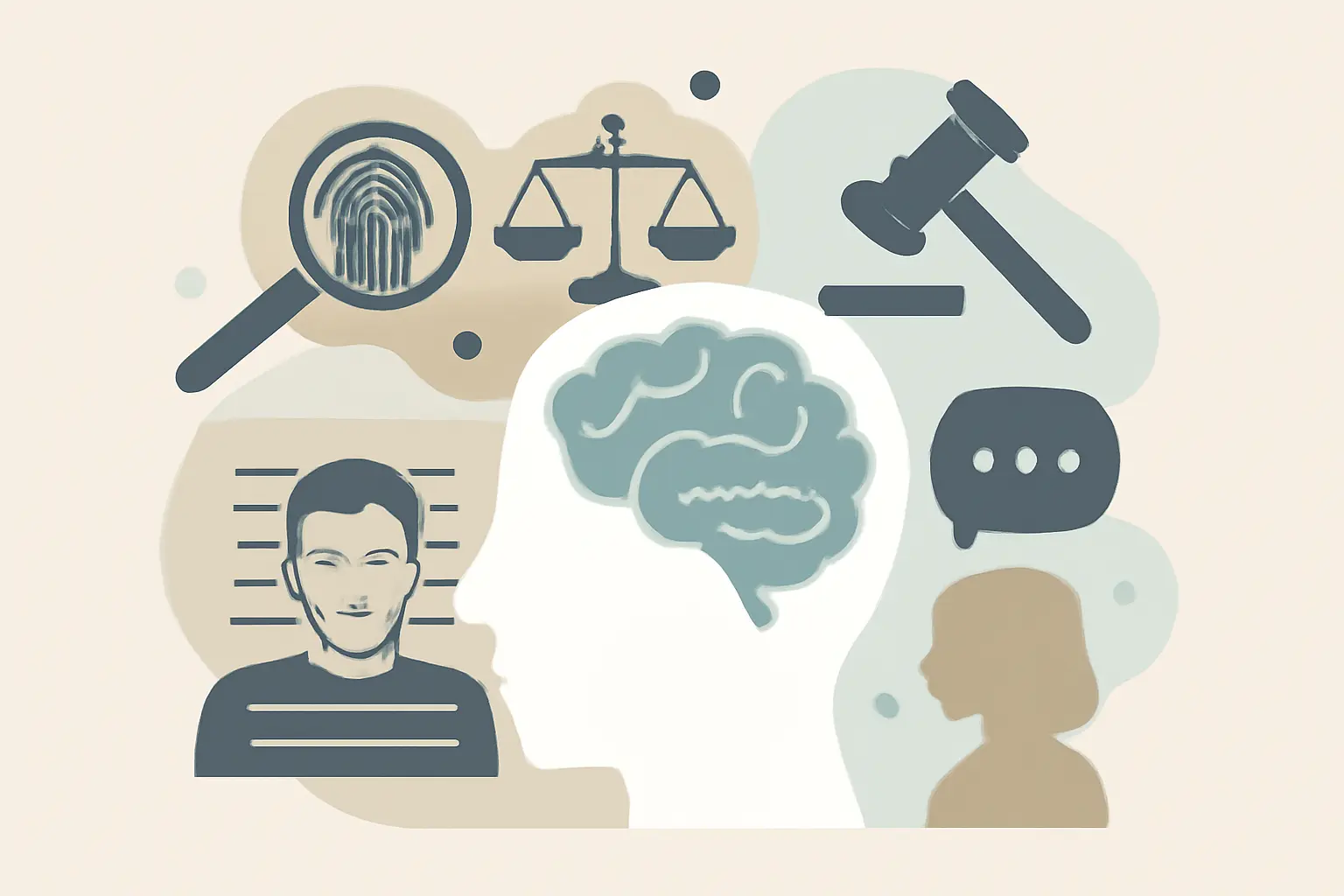
Top Forensic Psychology Dissertation Topics 2026
“Explore how Forensic Psychology connects law, behaviour, and mental health to understand criminal minds and justice systems in 2026.”
Table of Contents
Introduction
“Forensic Psychology applies psychological science to legal and criminal justice systems.”
Forensic psychology is the scientific study of how psychological principles apply to legal and criminal justice systems. It explores how cognitive, emotional, and social factors shape criminal behaviour, court decisions, and rehabilitation outcomes. As crime becomes increasingly sophisticated in the digital age, research in areas such as criminal profiling, deception detection, cyber-crime psychology, and victim behaviour is expected to grow significantly in 2026.
Forensic psychologists integrate clinical assessment, behavioural analysis, and neuroscience to understand offender motivations, courtroom actions, and correctional results. Their findings help improve policing strategies, enhance mental-health programs in prisons, and strengthen public safety policies.
Below is a curated list of the most innovative and high-impact Forensic Psychology dissertation topics for 2026, created to inspire strong academic research and support meaningful improvements within modern justice systems.
“Below are the most innovative and impactful Forensic Psychology dissertation topics for 2026, designed to inspire academic research and real-world justice reform.”
Criminal Profiling and Psychological Assessment (2026)
The field of criminal profiling is one of the most effective fields of forensic psychology so far especially in 2026 when the field of investigation would tend towards more effective and evidence-based means of survey. It is a science that focuses on the learning of cognitive, emotional and behavioural properties of criminals to ease criminal investigations and efficiency in pointing out potential suspects. Personality profiling and psychopathy tests continues to take the centre stage due to the fact that manipulation, impulsivity, absence of empathy and aggression are predominant factors that tend to impact on the formation of criminal behaviour- particularly violent and serial offences.
The psychology of serial offenders has been a research topic and studies have been implemented to monitor the motivations, behavioural trend and cognitive decision making by serial killers. These criminals tend to have unique traits of planning, taking of risk and controlling of their emotions and hence psychological assessment is essential in forecasting future behavior and preventing the occurrence of future crimes. Moreover, the forensic psychologist uses a structured instrument and test to identify psychopathy, cognitive distortions and emotional functioning to help the investigator to learn more about complicated offender behaviour.
Such a notion as the patterns of cognition used in the planning of crime also helps to understand why there are individuals who commit calculated but not impulsive crimes. It is possible to base investigative processes and correctional interventions on these lessons.
Dissertation Ideas:
- “Psychological Profiling of Serial Offenders: Behavioural Patterns and Predictive Accuracy (2026 Study).”
- “The Role of Forensic Assessment Tools in Identifying Psychopathy.”
- “Cognitive and Emotional Factors in Criminal Planning and Impulsivity.”
Eyewitness Testimony and Memory Reliability (2026)
The eyewitnesses witnessing a crime are very important in investigating a crime, but the scientific study of psychology has proved that the human memory is not an exact factor all the time. When it comes to the 2026, there is an increased interest in the ability of cognitive biases, emotional states, and external forces to corrupt witness recall. How events are remembered can be influenced by false memories, suggestibility, and various other subtle clues by law enforcement and can sometimes result in gross miscarriages of justice. It is imperative to learn these factors to enhance the reliability of the law.
The variables of particular significance are stress, anxiety, and trauma, which may either increase the memory of central information or significantly reduce the general memory. Attention is usually influenced in high-pressure situations and witnesses tend to overlook or misinterpret important actions. Also, there is a role of demographic variables like age, gender, and cultural background in determining the level of memory and perceived credibility in courtrooms.
As the world grows increasingly diverse and more intricate in their investigative methods, scholars in 2026 are looking at avenues in which they can enhance the accuracy of eyewitnesses by using a structured interview and psychological examination.
Dissertation Ideas:
- “The Psychology of Eyewitness Memory: The Role of Anxiety and Attention (2026 Research).”
- “Cross-Cultural Variations in Eyewitness Accuracy and Testimony Reliability.”
- “Improving Eyewitness Recall: A Study on Cognitive Interview Techniques.”
This area offers valuable insights for enhancing fairness and accuracy within the justice system.
Get 3 customized dissertation topics tailored to your interests for free! Simply contact us on WhatsApp, and our experts will help you select the perfect topic that aligns with your academic goals and career aspirations.
Criminal Behaviour and Psychopathology (2026)
Neuropsychological studies are also important in studying aggression and impulse control. The response to conflict or stress can be affected by brain abnormalities, impaired executive functioning, dysregulated emotional processing, etc. These biology vulnerabilities usually combine with environmental factors i.e. childhood trauma, neglect or prolonged exposure to violence which forms a channel to criminal behaviour.
The role of prevention and therapeutic intervention has become relevant as researchers today are more interested in the effect of early-life psychological disturbances on the patterns of offending during adulthood.
Dissertation Ideas:
- “Psychopathology and Violence: The Role of Mental Disorders in Criminal Offences.”
- “Childhood Trauma and Adult Criminal Behaviour: A Forensic Psychological Analysis.”
- “Neurocognitive Impairments and Impulsivity in Violent Offenders (2026 Study).”
This area provides rich opportunities to understand and address the roots of criminal behaviour.
Criminal Behaviour and Psychopathology (2026)
Psychological, biological, and social factors are greatly interconnected with criminal behaviour. Within the context of the year 2026, the field of forensic psychology is still studying the role of mental disorders, personality traits, and neurobiological processes in criminal behaviors. Antisocial and narcissistic personality disorder are the types of disorders that are often associated with manipulative, violent, and inhumane behaviors, which are capable of predisposing an individual to be more hostile. Knowledge of such characteristics aids forensic experts to evaluate the risk, anticipate the behaviours and develop specific rehabilitation interventions.
Neuropsychological studies are also important in studying aggression and impulse control. The response to conflict or stress can be affected by brain abnormalities, impaired executive functioning, dysregulated emotional processing, etc. These biology vulnerabilities usually combine with environmental factors i.e. childhood trauma, neglect or prolonged exposure to violence which forms a channel to criminal behaviour.
The role of prevention and therapeutic intervention has become relevant as researchers today are more interested in the effect of early-life psychological disturbances on the patterns of offending during adulthood.
Dissertation Ideas:
- “Psychopathology and Violence: The Role of Mental Disorders in Criminal Offences.”
- “Childhood Trauma and Adult Criminal Behaviour: A Forensic Psychological Analysis.”
- “Neurocognitive Impairments and Impulsivity in Violent Offenders (2026 Study).”
This area provides rich opportunities to understand and address the roots of criminal behaviour.
Juvenile Justice and Rehabilitation Psychology (2026)
The research of juvenile justice in 2026 is concerned with the possibility of understanding the role of psychological, social, and environmental factors in the formation of youth delinquency as well as the development of effective interventions in the context of behavioural change. Combinations of family conflict, academic difficulty, peer pressure and emotional dysregulation are common risk factors that young offenders undergo. Simultaneously, the supportive relationships, positive role models, and well-structured environments are considered as being the crucial protective factors that can help to prevent the emergence of long-term criminal behaviour.
Psychological interventions are becoming a part of the rehabilitation process and cognitive-behavioural therapy (CBT) is one of the most effective methods to use in juvenile detention centres. The programs are expected to enhance emotional and impulse control and decision making. Also, the family-based therapies have become more popular because of the enhanced family system which enhances the chances of long-term rehabilitation and reduces recidivism.
Mentorship, moral reasoning and empathy building are also part of the new juvenile reform strategies. In 2026, forensic psychologists stress on the fact that the models of rehabilitation should be holistic and aimed at correcting behaviour, as well as promoting resilience and positive identity building.
Dissertation Ideas:
- “Cognitive-Behavioural Interventions for Juvenile Offenders (2026 Research).”
- “Family Therapy and Rehabilitation Success in Juvenile Correctional Facilities.”
- “Moral Reasoning and Empathy Development in Youth Offenders.”
This field offers impactful research opportunities for improving youth justice systems.
Forensic Neuroscience and Brain-Based Research (2026)
The field of forensic neuroscience is changing the perception of criminal behaviour at an unprecedented rate as it studies the brain processes of aggression, impulse control and the process of making moral decisions. In 2026, improved technologies in neuroimaging include fMRI and PET scan which can enable a researcher to investigate the role of particular areas of the brain that lead to violent behaviour. Neural pathways, neurochemical imbalances, and irregular brain activity patterns tend to be associated with heightened aggression or a lack of proper judgment.
The frontal lobe, especially the prefrontal cortex, is one of the areas of research that are of importance in terms of planning, emotional control, and impulse control. This area has been associated with dysfunction or damage that causes impulse-based crimes and inability to comprehend consequences. These conclusions are useful in determining the culpability of the crime by the forensic professionals and in anticipating potential danger.
Nonetheless, there are also ethical issues that arise due to the increasing application of neuroscientific evidence. The issue of free will, reduced responsibility and whether brain-based judgments are just remain contentious in the legal and psychological circles. Scientists should exercise caution when taking research in the courtroom to ensure that it is used in a responsible manner.
Dissertation Ideas:
- “The Neural Basis of Aggression: Insights from fMRI Research (2026 Study).”
- “Frontal Lobe Damage and Impulsive Criminal Behaviour.”
- “Ethical Challenges in Neuroscientific Evidence for Criminal Responsibility.”
This field blends science, ethics, and law, offering cutting-edge dissertation possibilities.
Victimology and Trauma Psychology (2026)
Trauma psychology and victimology deal with the psychological effects that an individual may face after being exposed to a crime, violence or abuse. Current studies in the field (2026) are more focused on the emotional, cognitive, and behavioural effects of trauma, specifically, the emergence of post-traumatic stress disorder (PTSD). Violent crime victims usually have persistent anxiety, intrusive memories, hypervigilance and disrupted normal functioning. These are only some of the symptoms that make one realise that the support systems need to be more effective and accessible.
One of the most successful areas of research on victimology in the contemporary age is the subject of victim-blaming, where the society doubts or criticises the actions of the victim instead of seeking to establish the culpability of the perpetrator. These negative attitudes may increase distress, decrease help-seeking behaviour and increase recovery. To establish more understanding and supportive justice processes, it is important to understand cultural, social, and psychological factors that cause the victim-blaming.
Cognitive behavioural therapy (TF-CBT), EMDR and resilience building counselling are all therapeutic interventions that have been shown to play a key role during the healing process. These strategies assist the victims to deal with traumatic memories, re-establish the feeling of safety, and stabilise the emotional state.
Dissertation Ideas:
- “Psychological Trauma in Crime Victims: A Comparative Study of Gender and Coping Mechanisms.”
- “PTSD and Long-Term Emotional Impact of Violent Crimes.”
- “The Role of Counseling in Post-Victimisation Recovery (2026 Research).”
This field offers meaningful research opportunities to support victims’ recovery and justice reform.
Deception Detection and Lie Psychology (2026)
The detection of deception is a sensitive field of the forensic psychology and in 2026 it would keep developing as behavioural science and technology develop. Researchers seek to comprehend the pattern of lies through the verbal, nonverbal behaviour as well as the thinking process. Conventional techniques like polygraph testing are still popular, but the issue on accuracy, bias and ethical considerations have prompted a more scientific examination. Physiological responses are measured by polygraphs but they are imperfect in verifying the truth because during the test, they can be affected by anxiety, fear or other medical illnesses.
Micro expressions, eye movements, and gesture are all behavioural cues.
another focus that is important is inconsistencies. Such nuances of behaviour can be seen as a display of emotional dissonance or mental tension in the process of lying. Nevertheless, they should be interpreted with the help of a lot of training and standardised assessment techniques.
The most significant innovation in 2026 will be AI and machine learning in lie detection. Further-developed algorithms are able to interpret speech patterns, facial expressions, and physiological information more accurately, which means that there are new opportunities in terms of forensic investigations. Although such technologies have potential, they also provoke issues related to privacy, justice, and possible abuse in police work.
Dissertation Ideas:
- “Verbal and Nonverbal Indicators of Deception in Interrogation Settings.”
- “AI-Assisted Lie Detection: The Future of Forensic Psychology (2026 Study).”
- “Ethical Implications of Technological Deception Tools in Law Enforcement.”
This field offers cutting-edge research potential with significant practical impact.
Gender, Culture, and Forensic Psychology (2026)
The aspects of gender and cultural diversity are also becoming acknowledged as necessary parts of forensic psychology studies in 2026. The criminal behaviour, motive, aggression levels, and psychological patterns between genders have a tendency to differ and hence, it becomes significant to investigate how biological, social and cultural factors determine offending. Women, by way of example, could be involved in a crime because of emotional distress or relationship conflict and men more often are aggressive in connection with dominance or impulsively. The learning of these gender-based differences assists the risk assessment and rehabilitation strategies.
The cultural norms are also influential in determining criminal behaviour and affecting the justice outcomes. Different cultures have different beliefs regarding violence, power, and family and they all may influence both the offending behavior and how the members of the society are handled by the legal system. This brings up the issue of cultural bias in the forensics assessments where evaluators can inadvertently make sense of behaviours with a western or dominating cultural understanding.
Another level of complexity is intersectionality whereby gender, culture, socioeconomic status and identity intersect. Forensic psychologists in the year 2026 will focus on the evaluation practices that are inclusive to all the population to bring about fairness and accuracy in the evaluation.
Dissertation Ideas:
- “Gender and Crime: A Comparative Study of Male and Female Offender Psychology.”
- “Cultural Bias in Forensic Assessments: A Global Perspective.”
- “Cross-Cultural Forensic Psychology: Understanding Crime Through Cultural Contexts.”
This area encourages research that promotes equity and cultural sensitivity within forensic practice.
Ethics, Law, and Psychological Practice in Forensics (2026)
In forensic psychology, ethics is considered a central aspect, as forensic professionals have to balance between scientific accuracy, law and moral responsibility. The ethical aspect of this has been challenging in 2026 since the presence of psychological evidence in criminal cases and the verdict is on the rise. Forensic psychologists often find themselves in a dilemma when profiling offenders, giving expert testimony, or when assessing people involved in a court case. It is important to ensure objectivity without being biased when administering justice and professionalism.
Psychologist client privilege is one of the biggest challenges, particularly in the cases where the sensitive information can influence the public safety or legal consequences. The decision about the ethically disclosed information demands a certain amount of judgment and legal consideration as well as client rights protection. Meanwhile, forensic professionals should be able to report credible scientifically-based information to the courts without exceeding the scope of their practice.
Accuracy, fairness, and possible abuse are additional issues that are raised by the application of psychological evidence in the courts. Improper interpretation of tests or biased testifying can have an adverse effect on the final verdict and, therefore, standard practices and ethical training are essential.
Dissertation Ideas:
- “Ethical Challenges in Forensic Testimony: Balancing Objectivity and Justice (2026).”
- “Psychological Confidentiality and Legal Obligations in Criminal Cases.”
- “The Ethical Use of Psychological Evidence in Judicial Systems.”
This field encourages meaningful research on maintaining integrity and fairness in forensic practice.
Future Trends and Technological Innovations in Forensic Psychology (2026)
The future of forensic psychology in 2026 is informed by the accelerated changes in technology that are changing the process of crime analysis, prediction and prevention. Artificial intelligence (AI) recently has a major role in murders profiling, as it allows specialists to determine behavioural patterns more accurately. The predictive policing technologies are based on machine learning to predict the crime hotspots, but the issue of fairness, transparency, and ethical abuse remains. The advances are leading researchers to consider ways technology can be used to promote justice without strengthening their biases.
One more disruptive technology is virtual reality (VR). VR technologies enable the offender to engage in simulated form of rehabilitative conditions that enhance emotional control, empathy, and decision-making. VR Courtroom simulations also enable the training of witnesses, law students, and forensic experts through simulation.
Big data analytics has also increased the field of forensic psychology. Big data of behavioural information assists in forecasting criminal patterns, risk evaluation, and more effective policing. Nonetheless, privacy, consent, and accountability are other emerging concerns concerning the increased dependence on data.
Dissertation Ideas:
- “AI and Predictive Policing: Ethical and Psychological Implications (2026 Study).”
- “Virtual Reality in Criminal Rehabilitation: A Cognitive Behavioural Perspective.”
- “Big Data and Crime Prediction: The Future of Forensic Psychology Research.”
This area highlights how cutting-edge technology is reshaping the future of forensic psychology.
Download Forensic Psychology Dissertation Topics PDF
FAQs on Forensic Psychology Dissertation Topics
What are the trending topics in Forensic Psychology for 2026?
Forensic neuroscience, criminal profiling based on AI, high-precision technologies in the field of deception detection, trauma psychology, and cultural diversity during forensic testing will be among the most popular research fields in 2026. The sphere is rapidly developing based on the new technologies and scientific discoveries.
What are the best undergraduate dissertation ideas?
Topics that are practical, manageable, and embraced by previous researches are usually useful to undergraduate students. The best possible options are the reliability of eyewitness memory, criminal justice rehabilitation programmes, the victim responses to trauma, and ethical issues in forensic practice.
How does neuroscience contribute to forensic psychology?
Neuroscience has been instrumental in offering important information about the brain processes which regulate aggression, impulse management, moral judgment, and decision-making. It assists in understanding why some people commit violent crime or impulsively and why it can help to create more precise forensic assessment with the help of such techniques as fMRI and brain mapping.
What are the main ethical concerns in forensic psychology?
Key ethical considerations are client confidentiality, criminal profiling impartiality, fairness in the forensic analysis, and the ethical application of psychological or neuroscientific evidence in the court. Such issues demand stringent professional standards in order to safeguard justice and personal rights.
Conclusion:
Forensic Psychology dissertation topics for 2026 highlight the powerful intersection of science, empathy, and justice in understanding human behaviour. As the criminal landscape evolves, students and researchers are encouraged to investigate how psychological processes shape both offending patterns and legal responses. The integration of neuroscience, artificial intelligence, behavioural science, and trauma research is transforming the field, offering deeper insight into criminal motivations, memory reliability, victim recovery, and courtroom decision-making.
These topics empower researchers to analyse complex issues such as offender cognition, deception, ethical dilemmas, and the diverse cultural influences within justice systems. At the same time, they emphasise the importance of rehabilitation, fairness, and psychological well-being principles that lie at the heart of effective forensic practice. Exploring these areas not only strengthens academic understanding but also supports real-world improvements in policing, legal policy, and mental-health interventions.
“The Forensic Psychology dissertation ideas for 2026 inspire a new generation of scholars to contribute innovative research that promotes safer communities and more equitable justice systems. Through scientific inquiry and compassionate insight, students can help shape a future where forensic psychology continues to drive meaningful reform and enhance public safety.”
EXCELLENT Based on 12 reviews Posted on Evie CharlotteTrustindex verifies that the original source of the review is Google. 5 stars for Online Dissertation Help I was very anxious because of my short deadline, but I received a well-structured dissertation on time. Whatever they promise, they deliver exactly the same work. I am really thankful to their team.Posted on Rasa PakarskaiteTrustindex verifies that the original source of the review is Google. Quick and very helpful ! Highly recommendedPosted on Saud ShoukatTrustindex verifies that the original source of the review is Google. Writing dissertation was so stressful for me but with online dissertation help it become easy. They did everything perfect, well researched and on time. Because of them I got higher marks. I really appreciate their support.Posted on Shahnila MehmoodTrustindex verifies that the original source of the review is Google. Very good approach. You managed to understand and explain difficult topics in simple way. You are highly recommended.Posted on Basic knowledgeTrustindex verifies that the original source of the review is Google. With full of confidence i can say this she made my assignments and thesis work and gave me merit. Highly recommended.Posted on Owen AixöTrustindex verifies that the original source of the review is Google. Nice platform, great service. Recommendable and commendable…Posted on Ramsha BaigTrustindex verifies that the original source of the review is Google. Thanks to online dissertation help for providing top-notch dissertation assistance. I highly recommend them if you need help with your dissertation.Posted on sohail aslamTrustindex verifies that the original source of the review is Google. I recently used the services of 'Online Dissertation Help' ( Leeds) and was thoroughly impressed by the professionalism and expertise of their staff. From the moment I reached out, the team was incredibly supportive and responsive. They provided valuable insights and guidance that significantly improved the quality of my dissertation. The writers are clearly experts in their fields, and their attention to detail is unmatched. I highly recommend 'Online Dissertation Help' to anyone in need of top-notch dissertation assistance. Their services are truly exceptional and worth every penny!Posted on Shannon MaxfieldTrustindex verifies that the original source of the review is Google. A remarkable experience for me they where very helpful saved me time, effort and stress free as I have a very busy life with children and work they keep you updated with everything and make sure you are happy with it all - AI detected to. Great people to do for any assignments as I have had few now had high expectations marks and very affordable prices.Verified by TrustindexTrustindex verified badge is the Universal Symbol of Trust. Only the greatest companies can get the verified badge who has a review score above 4.5, based on customer reviews over the past 12 months. Read more
Our process starts when you place the order on our website after chatting with our agent.
Once the order is placed, it is ensured that it comes in our expertise before its acceptance.
A writer is assigned based on the degree requirement.
3 topics are shared for approval. The outline comprises of Research Gap, Research Questions & Objectives, and Conceptual Framework.
After outline approval, the proposal is drafted and submitted for approval.
The dissertation writing process begins based on approved guidelines.
Our Quality Assurance team ensures that the work is original and error-free.
The final dissertation is submitted after passing through all quality checks.