


Oncology Nursing Dissertation Topics for 2026

Questions Students Are Asking About Oncology Nursing Dissertations
- What are the best oncology nursing dissertation topics for 2026?
- How do I choose a dissertation topic in oncology nursing that is original and researchable?
- What are the trending topics in oncology nursing for a Master’s thesis right now?
- Can I find topics for a BSc thesis in oncology nursing that are focused enough for undergraduate level?
- What oncology nursing topics are suitable for a PhD-level research proposal?
- Which oncology research topics for nursing students are most relevant to current clinical practice?
- How do I write a strong research aim and clear objectives for my oncology dissertation?
- Are there oncology dissertation topics related to palliative care, mental health, or digital health?
Introduction: Why Your Dissertation Topic in Oncology Nursing Matters
Choosing the right dissertation topic is one of the most important academic decisions a nursing student will make. In oncology nursing, where clinical practice evolves rapidly and patient needs are increasingly complex, your research topic reflects not just your academic ability but your understanding of the field.
A well-chosen topic demonstrates that you can connect evidence-based practice with real-world healthcare challenges. It also positions your work within current academic conversations around cancer care, survivorship, mental health integration, and health equity.
If you are currently searching for dissertation topics in oncology nursing and feel unsure where to start, this guide is designed to help. Whether you are working at undergraduate, master’s, or doctoral level, you will find structured topic ideas, clear examples, and practical guidance to support your research journey.
Students who feel overwhelmed during the topic selection stage often benefit from personalised academic guidance. Exploring online dissertation help at an early stage can prevent common mistakes such as choosing topics that are too broad, too narrow, or already over-researched.
Download Oncology Nursing Dissertation Topics PDF
Students looking to save time during topic selection can access a downloadable PDF containing a curated list of oncology nursing dissertation topics prepared by subject-area academic specialists. The list is personalised to your level of study and research interests.
To receive the PDF, students complete a short academic preferences form. Once submitted, the document is sent directly and includes topic suggestions tailored to your degree level, alongside brief notes on research viability and methodological fit.
Why Choosing the Right Oncology Nursing Dissertation Topic Matters
Oncology nursing sits at the intersection of clinical science, patient psychology, public health policy, and palliative ethics. Because of this, your dissertation topic must be specific enough to generate original findings, yet broad enough to carry academic and clinical significance.
A poorly chosen topic often leads to unfocused literature reviews, methodological confusion, and weak conclusions. A well-structured oncology nursing research topic, by contrast, gives your dissertation direction from the start.
Selecting your topic early also gives you time to review existing literature, identify gaps in current research, and refine your research questions before submission deadlines approach. This is especially important for Master’s and PhD candidates, where research originality is a core assessment criterion.
Key Research Areas in Oncology Nursing for 2026
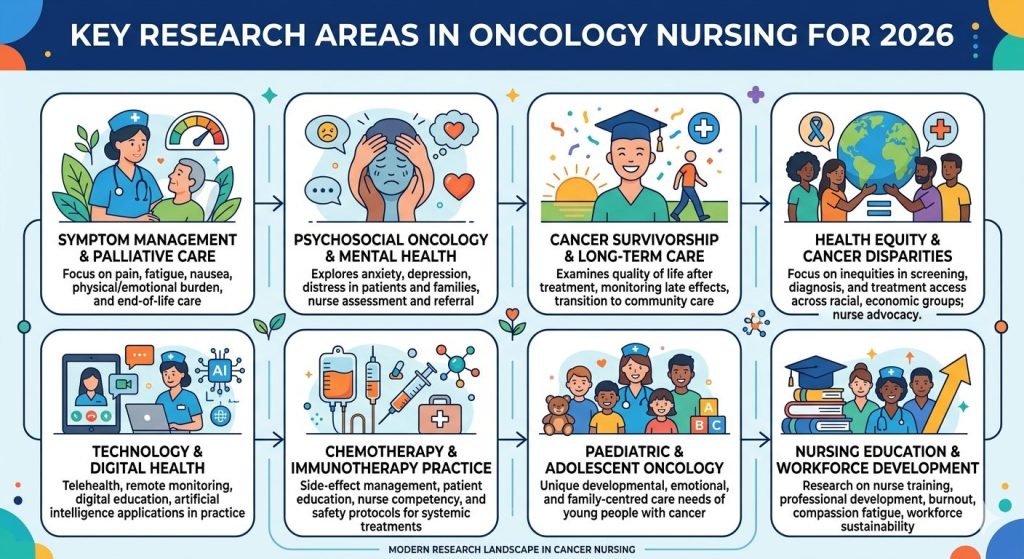
Before exploring specific dissertation topics, it helps to understand the broader research landscape. The following areas represent established and growing domains within the field, based on current academic literature and healthcare research priorities.
Symptom Management and Palliative Care Nursing research in this area focuses on pain management, fatigue, nausea, and the broader physical and emotional burden of cancer treatment. It also covers end-of-life care decision-making and the nurse’s role in these conversations.
Psychosocial Oncology and Mental Health This area explores anxiety, depression, and psychological distress in cancer patients and their families, along with how oncology nurses assess, manage, and refer these conditions.
Cancer Survivorship and Long-Term Care As survival rates improve, research in this domain examines quality of life after treatment, late-effects monitoring, and the transition from active treatment to community-based survivorship care.
Health Equity and Cancer Disparities Studies in this area focus on inequities in cancer screening, diagnosis, and treatment access across racial, economic, and geographic groups, including the nurse’s role in advocating for equitable care.
Technology and Digital Health in Oncology This growing domain includes telehealth, remote symptom monitoring, digital patient education, and artificial intelligence applications in cancer nursing practice.
Chemotherapy and Immunotherapy Nursing Practice Research here looks at side-effect management, patient education, nurse competency, and safety protocols related to systemic cancer treatments.
Paediatric and Adolescent Oncology Nursing This specialised area focuses on the unique developmental, emotional, and family-centred care needs of children and young people living with cancer.
Oncology Nursing Education and Workforce Development Research in this domain examines nurse training, professional development, burnout, compassion fatigue, and workforce sustainability in oncology settings.
Five Example Oncology Nursing Dissertation Topics With Aims and Objectives
The following examples demonstrate how a strong dissertation topic is structured with a focused research aim and measurable objectives. These examples are intended to guide students in developing their own research proposals.
Example 1
Topic: The role of oncology nurses in managing chemotherapy-induced peripheral neuropathy in adult patients
Research Aim: To examine current nursing practices in the assessment and management of chemotherapy-induced peripheral neuropathy among adult cancer patients in hospital settings.
Research Objectives:
- To identify assessment tools currently used by oncology nurses to detect peripheral neuropathy
- To explore nurse-reported barriers to consistent neuropathy monitoring across oncology wards
- To evaluate patient satisfaction with nursing-led neuropathy education and support
Example 2
Topic: Psychological distress screening practices among oncology nurses in outpatient cancer clinics
Research Aim: To investigate how oncology nurses in outpatient settings identify, document, and respond to psychological distress in adult cancer patients.
Research Objectives:
- To review validated screening tools used in outpatient oncology nursing practice
- To explore how nurses communicate distress findings to multidisciplinary teams
- To assess the impact of screening practices on patient referral rates to psychological support services
Example 3
Topic: Oncology nursing support for cancer patients transitioning from active treatment to survivorship care
Research Aim: To explore the nature and adequacy of nursing support provided to adult cancer patients during the transition from hospital-based treatment to community survivorship programmes.
Research Objectives:
- To identify the informational and emotional needs of patients at the point of treatment completion
- To examine nurse-led survivorship care planning practices and their consistency across care settings
- To assess patient-reported outcomes related to nursing support during survivorship transition
Example 4
Topic: The impact of culturally sensitive nursing communication on treatment adherence in ethnically diverse oncology populations
Research Aim: To examine how culturally responsive communication strategies used by oncology nurses affect treatment adherence in patients from diverse ethnic backgrounds.
Research Objectives:
- To identify communication barriers experienced by ethnically diverse cancer patients in oncology settings
- To explore how nurses adapt their communication approach to meet cultural and linguistic needs
- To evaluate the relationship between cultural sensitivity in nursing practice and patient adherence to treatment regimens
Example 5
Topic: Burnout and compassion fatigue among specialist oncology nurses: contributing factors and institutional responses
Research Aim: To investigate the prevalence of burnout and compassion fatigue among oncology nurses, and to assess the effectiveness of institutional wellbeing strategies in mitigating these outcomes.
Research Objectives:
- To measure the prevalence of burnout and compassion fatigue in oncology nursing settings using validated tools
- To identify occupational and personal factors that contribute to emotional exhaustion in oncology nurses
- To evaluate the effectiveness of existing institutional support programmes in reducing compassion fatigue
80 Oncology Nursing Dissertation Topics for 2026
The following topics are organised under key subfields within oncology nursing. Each topic is designed to be focused, researchable, and aligned with 2026-level academic expectations. Students may use these directly as dissertation topics or adapt them to fit their specific research context. Academic support such as online dissertation help can assist students in refining these ideas further for their research proposals.
Symptom Management and Palliative Care
- Nurse-led pain assessment protocols and their effectiveness in reducing undertreated pain in advanced cancer patients
- The use of non-pharmacological interventions by oncology nurses to manage cancer-related fatigue in elderly patients
- Oncology nurses’ experiences of providing end-of-life care during high-pressure hospital admissions
- Palliative care referral practices and the nurse’s role in facilitating timely transitions for terminal cancer patients
- How oncology nurses manage breakthrough pain in patients receiving palliative radiotherapy
- Nausea and vomiting management in chemotherapy patients: a review of current nursing-led strategies
- Oncology nurses’ perspectives on dyspnoea management at end of life in inpatient palliative settings
- The role of advance care planning in oncology nursing practice and its influence on patient outcomes
- Sleep disturbance in cancer patients receiving active treatment: nursing assessment and intervention practices
- Oral care protocols implemented by oncology nurses for patients experiencing chemotherapy-induced mucositis
Psychosocial Oncology and Mental Health Nursing
- How oncology nurses identify and respond to depression in newly diagnosed cancer patients
- Anxiety management in cancer patients undergoing radiotherapy: the effectiveness of nurse-delivered interventions
- Oncology nursing approaches to supporting patients who express fear of cancer recurrence
- The mental health needs of long-term cancer survivors and how oncology nurses address them
- Nurse-patient communication and its role in reducing psychological distress during chemotherapy
- Supporting partners and family caregivers: the psychosocial role of the oncology nurse in family-centred care
- How oncology nurses recognise and manage adjustment disorders in adult cancer patients
- The use of mindfulness-based support by oncology nurses in reducing patient anxiety during treatment
- Emotional labour and its effect on the therapeutic relationships oncology nurses build with patients
- Oncology nurses’ confidence in identifying suicidal ideation in cancer patients: a gap analysis
Cancer Survivorship Nursing
- Oncology nurses’ role in developing personalised survivorship care plans for breast cancer survivors
- Long-term follow-up care for colorectal cancer survivors: challenges faced by community oncology nurses
- Fatigue in cancer survivorship: nursing strategies to support self-management after treatment completion
- Lymphoedema management in breast cancer survivorship: the role of specialist oncology nurses
- Body image concerns among cancer survivors and how oncology nurses address them in follow-up care
- The transition from paediatric to adult oncology care: nursing support for adolescent cancer survivors
- Sexual health needs of cancer survivors and the barriers oncology nurses face in addressing them
- Nurse-led telephone follow-up clinics for cancer survivors: effectiveness and patient satisfaction
- Cognitive impairment after chemotherapy: nursing assessment and management strategies in survivorship care
- How oncology nurses support cancer survivors in returning to work after treatment
Health Equity and Cancer Care Disparities
- Racial disparities in cancer pain management and the role of oncology nurses in equitable care delivery
- Access to oncology nursing services in rural and remote communities: barriers and proposed solutions
- How ethnicity influences cancer screening uptake and the nursing role in reducing disparities
- Oncology nurses’ perceptions of providing culturally competent care to migrant cancer patients
- Socioeconomic factors affecting cancer treatment adherence and the nurse’s role in addressing financial toxicity
- Disparities in palliative care access among minority ethnic cancer patients: a nursing perspective
- The experiences of LGBTQ+ cancer patients in oncology settings and how nurses can improve inclusive care
- Gender differences in cancer symptom reporting and how oncology nurses adjust their assessment approach
- Disability and cancer care: how oncology nurses adapt communication and care delivery for patients with disabilities
- Health literacy and cancer treatment understanding: the nurse’s role in supporting low-literacy patients
Technology and Digital Health in Oncology Nursing
- Telehealth consultations in oncology nursing: patient satisfaction and clinical effectiveness during follow-up care
- Remote symptom monitoring tools in cancer care: how oncology nurses use digital data to inform clinical decisions
- Patient-reported outcome measures delivered via smartphone apps: implications for oncology nursing practice
- The use of artificial intelligence in cancer symptom triage and its effect on nursing workload
- Digital health literacy among older adult cancer patients and its impact on nurse-led digital care programmes
- Electronic nursing documentation in oncology settings: accuracy, efficiency, and impact on care continuity
- How oncology nurses integrate wearable health technology into the monitoring of chemotherapy side effects
- Virtual reality as a distraction tool during cancer procedures: a review of the nursing evidence base
- Cybersecurity risks in digital oncology nursing practice and how nurses can protect patient data
- The acceptability of chatbot-based symptom support tools among cancer patients: implications for nursing practice
Chemotherapy and Immunotherapy Nursing Practice
- Chemotherapy extravasation incidents in oncology wards: nurse knowledge, prevention strategies, and outcomes
- Oncology nurse competency in administering immunotherapy: training needs and self-assessed confidence levels
- Patient education provided by oncology nurses before initiating immunotherapy treatment
- Immune-related adverse events from checkpoint inhibitors: how oncology nurses detect and manage them
- Safe handling of cytotoxic drugs in oncology nursing: compliance with current guidelines and associated risks
- Oral chemotherapy adherence in outpatient cancer patients: the nurse’s role in monitoring and education
- Venous access management in chemotherapy patients: comparing nursing outcomes across device types
- Dose modification and treatment delays in chemotherapy patients: the nurse’s role in patient support and communication
- Fatigue associated with immunotherapy: nursing assessment and management strategies in clinical practice
- Central line-associated bloodstream infection prevention in oncology settings: a review of nursing-led interventions
Paediatric and Adolescent Oncology Nursing
- Pain assessment in non-verbal paediatric cancer patients: the effectiveness of nurse-administered tools
- Parental anxiety in paediatric oncology settings and how nurses provide psychological support to families
- School reintegration for children returning after cancer treatment: the oncology nurse’s advocacy role
- Adolescent cancer patients’ experiences of communicating with oncology nurses during active treatment
- Sibling wellbeing in families of children with cancer: the oncology nurse’s awareness and referral practices
- End-of-life care in paediatric oncology: how nurses navigate truth-telling with parents and young patients
- Nurse-led play therapy and distraction techniques in reducing procedural anxiety in child cancer patients
- Nutritional support for paediatric cancer patients: the role of oncology nurses in assessment and intervention
- Fatigue in adolescent cancer patients receiving chemotherapy: nursing management and patient-reported outcomes
- Transition planning from children’s to adult oncology services: the role of specialist transition nurses
Oncology Nursing Education, Workforce, and Wellbeing
- Compassion fatigue in oncology nurses: prevalence, contributing factors, and institutional support strategies
- The effectiveness of simulation-based training in preparing nursing students for oncology clinical placements
- Newly qualified nurses’ experiences of working in oncology wards: a qualitative exploration
- The impact of continuing professional development on oncology nurses’ clinical confidence and competency
- Moral distress in oncology nursing: sources, frequency, and coping mechanisms used by specialist nurses
- Mentorship and clinical supervision in oncology nursing: their impact on nurse retention and job satisfaction
- How oncology nursing teams communicate effectively during patient handovers in high-dependency cancer units
- The effect of staff shortages on oncology nursing practice standards and patient safety outcomes
- Interprofessional collaboration in oncology settings: how nurses perceive their role within the multidisciplinary team
- Oncology nurses’ perceptions of their professional identity and its influence on career development decisions
Conclusion: Making an Informed Start to Your Oncology Nursing Dissertation
Selecting a strong dissertation topic is the foundation of a successful research project. In oncology nursing, the breadth and depth of the field means there is no shortage of important, clinically relevant, and academically significant research directions available to you.
The 80 oncology nursing topics in this post reflect established subfields, emerging research priorities, and areas of practice that continue to evolve in line with cancer treatment advances and healthcare policy. Whether you are completing a BSc, a Master’s thesis, or a doctoral programme, aligning your topic with current academic discourse will give your dissertation immediate relevance and a clear contribution to the field.
Take time to explore the research landscape in your chosen area before committing to a topic. Review recent systematic reviews, look at what questions remain unanswered in the literature, and consider whether your research question is achievable within your time frame and available resources.
Choosing your topic with care, and approaching your dissertation with academic integrity, will shape not only your grade but your development as an evidence-based oncology nursing professional
