


Cardiology Dissertation Topics for 2026

Questions Students Are Asking About Cardiology Dissertation Topics
Students across university forums and academic discussion platforms regularly post questions when they feel stuck choosing their dissertation topics. The questions below reflect genuine concerns shared by medical and health science students at undergraduate, master’s, and PhD level. This post answers all of them.
- What are the best cardiology dissertation topics for 2026?
- Which cardiovascular dissertation topics are suitable for a master’s-level research proposal?
- How do I choose a cardiology research topic that is specific enough to be researchable?
- What are the latest cardiology research topics that align with current clinical priorities?
- Can I get cardiology dissertation topics with examples that show how to write a research aim and objectives?
- Are there heart disease research topics that combine clinical and public health perspectives?
- What topics in clinical cardiology are currently under-researched but still feasible for a student?
- How do I know if my dissertation topic is suitable for PhD-level investigation?
Why Choosing the Right Cardiology Dissertation Topic Matters
Cardiology sits at the intersection of clinical medicine, biomedical science, public health, and emerging technology. It is one of the most research-active fields in medicine globally, and choosing the right dissertation topic can define the quality, credibility, and academic impact of your entire research project.
A well-chosen topic helps you demonstrate academic rigour, stay within realistic scope, and contribute meaningfully to existing literature. Poorly defined topics, on the other hand, often lead to confusion during the methodology stage and weak findings at the end.
For students working on their first major research project, the challenge is not finding something interesting to write about. There is plenty of interesting ground in cardiology. The real challenge is narrowing your focus to something specific, researchable, and relevant to current academic and clinical priorities.
If you are feeling uncertain about where to begin, accessing structured online dissertation help early in your process can save you significant time and prevent common mistakes that students make during topic selection.
Download Cardiology Dissertation Topics PDF
Many students prefer to review a curated list of topics before committing to a direction. Academic experts have compiled a downloadable PDF containing a personalised selection of cardiology dissertation topics aligned with current research priorities. Students can access this resource by completing a short form, after which the PDF is sent directly to them. The topics inside are organised by academic level and research area, making it easier to match a topic to your specific programme requirements.
Key Research Areas in Cardiology for 2026
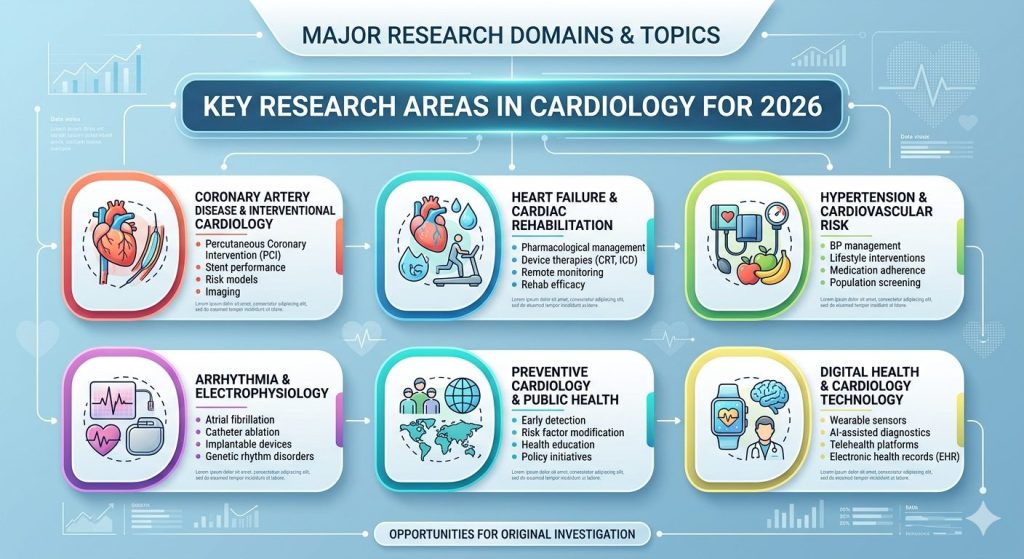
Before selecting a dissertation topic, it helps to understand the major research domains within cardiology. Each area has its own body of literature, ongoing clinical debates, and opportunities for original investigation.
Coronary Artery Disease and Interventional Cardiology
Research in this area focuses on the prevention, diagnosis, and treatment of blockages in the coronary arteries. Topics range from percutaneous coronary intervention outcomes to drug-eluting stent performance and risk stratification models.
Heart Failure and Cardiac Rehabilitation
Heart failure remains one of the leading causes of hospitalisation worldwide. Research here explores pharmacological management, device therapies, remote monitoring, and the effectiveness of structured rehabilitation programmes.
Hypertension and Cardiovascular Risk
Hypertension is a modifiable risk factor implicated in stroke, heart failure, and myocardial infarction. This area covers blood pressure management, lifestyle interventions, medication adherence, and population-based screening programmes.
Arrhythmia and Electrophysiology
Research into arrhythmia covers everything from atrial fibrillation management to catheter ablation outcomes, implantable device performance, and the genetic basis of inherited rhythm disorders.
Preventive Cardiology and Public Health
This area examines population-level strategies to reduce the burden of cardiovascular disease through early detection, risk factor modification, and health education initiatives.
Digital Health and Cardiology Technology
Wearable sensors, artificial intelligence-assisted diagnostics, telehealth platforms, and electronic health records are transforming how cardiac conditions are monitored and managed. Research in this space is growing rapidly.
Five Cardiology Dissertation Topic Examples with Aims and Objectives
Understanding how a strong dissertation topic is structured will help you build your own research proposal. Below are five examples of cardiology dissertation topics with examples of how to define their aims and objectives clearly.
Example 1
Topic: The effectiveness of beta-blockers in reducing mortality rates among patients with chronic heart failure in secondary care settings.
Research Aim: To evaluate the clinical effectiveness of beta-blocker therapy in reducing all-cause mortality in adults diagnosed with chronic heart failure.
Research Objectives:
- To review existing clinical evidence on beta-blocker use in heart failure management
- To compare mortality outcomes between patients receiving beta-blockers and those receiving alternative therapies
- To identify patient subgroups that demonstrate the greatest clinical benefit
Example 2
Topic: Adherence to antihypertensive medication among adults aged 60 and above in urban primary care settings.
Research Aim: To investigate the factors influencing medication adherence in older adults receiving antihypertensive therapy.
Research Objectives:
- To identify sociodemographic and clinical factors associated with non-adherence
- To assess the role of healthcare provider communication in supporting adherence
- To recommend evidence-based strategies to improve adherence rates in this population
Example 3
Topic: Predictive accuracy of machine learning algorithms in detecting atrial fibrillation using wearable ECG devices.
Research Aim: To assess the diagnostic accuracy of machine learning models applied to wearable ECG data for detecting atrial fibrillation in non-clinical settings.
Research Objectives:
- To compare sensitivity and specificity across different algorithm types
- To evaluate the usability of wearable ECG devices among adults aged 50 and above
- To identify limitations of current machine learning approaches in cardiac arrhythmia detection
Example 4
Topic: The association between sedentary behaviour and the progression of coronary artery disease in middle-aged adults.
Research Aim: To examine the relationship between prolonged sedentary behaviour and the rate of coronary artery disease progression in adults aged 40 to 65.
Research Objectives:
- To quantify sedentary time using validated measurement tools in the study population
- To analyse imaging data to assess coronary artery plaque burden over a defined follow-up period
- To control for confounding variables including diet, smoking, and existing comorbidities
Example 5
Topic: Exploring patient experiences of cardiac rehabilitation following myocardial infarction in the National Health Service.
Research Aim: To understand the lived experiences of patients who participated in NHS-based cardiac rehabilitation programmes following myocardial infarction.
Research Objectives:
- To gather qualitative data from patients regarding perceived benefits and barriers of participation
- To analyse how individual health beliefs influence engagement with rehabilitation
- To provide recommendations for improving patient-centred delivery of cardiac rehabilitation services
80 Cardiology Dissertation Topics for 2026
The following topics are organised by subfield and are suitable for undergraduate, master’s, and PhD-level research proposals. Each topic is specific, researchable, and aligned with current academic priorities in cardiology.
Coronary Artery Disease Topics
- The role of high-sensitivity troponin assays in early diagnosis of acute coronary syndrome in emergency departments
- Long-term clinical outcomes of drug-eluting stents versus bare-metal stents in patients with stable coronary artery disease
- Sex differences in the presentation and management of acute coronary syndrome in secondary care
- The impact of statin therapy on plaque regression in patients with confirmed coronary artery disease
- Evaluating the accuracy of computed tomography coronary angiography in detecting obstructive coronary disease
- Socioeconomic determinants of delayed presentation in patients with acute myocardial infarction
- The effectiveness of dual antiplatelet therapy duration following percutaneous coronary intervention
- Coronary microvascular dysfunction as an independent predictor of adverse cardiovascular events
- The association between obstructive sleep apnoea and the severity of coronary artery disease
- Risk stratification models for predicting major adverse cardiac events in patients undergoing elective coronary angiography
Heart Failure Research Topics
- The prognostic value of NT-proBNP levels in patients with newly diagnosed heart failure with reduced ejection fraction
- Comparing outcomes of heart failure with preserved ejection fraction versus reduced ejection fraction in elderly patients
- Barriers to enrolling patients with heart failure in structured cardiac rehabilitation programmes
- The effectiveness of remote patient monitoring in reducing hospital readmission rates in chronic heart failure
- Palliative care integration in the management of end-stage heart failure: a qualitative exploration
- The role of sacubitril/valsartan in improving quality of life among patients with heart failure
- Iron deficiency as a comorbidity in heart failure: clinical implications and treatment outcomes
- Multidisciplinary heart failure clinics and their impact on patient self-management behaviours
- The relationship between depression and hospital readmission in patients with chronic heart failure
- Dietary sodium restriction and its clinical significance in the management of decompensated heart failure
Hypertension and Blood Pressure Management
- The effectiveness of lifestyle modification programmes in reducing blood pressure in adults with stage 1 hypertension
- Resistant hypertension: prevalence, underlying causes, and treatment strategies in primary care
- Assessing the accuracy of home blood pressure monitoring compared with ambulatory blood pressure monitoring
- Hypertension management in pregnant women: clinical guidelines, adherence, and maternal outcomes
- The impact of sleep quality on blood pressure regulation in adults with diagnosed hypertension
- Racial and ethnic disparities in hypertension diagnosis and treatment in urban populations
- Long-term cardiovascular outcomes in patients with masked hypertension identified through ambulatory monitoring
- Patient knowledge and self-management of hypertension in low-resource community settings
- The role of renin-angiotensin-aldosterone system inhibitors in reducing hypertension-related end-organ damage
- Digital health applications for blood pressure self-monitoring: usability and clinical effectiveness
Arrhythmia and Electrophysiology
- Catheter ablation versus antiarrhythmic drug therapy for rhythm control in persistent atrial fibrillation
- The impact of atrial fibrillation on cognitive decline in older adults: a longitudinal perspective
- Genetic screening for inherited arrhythmia syndromes in first-degree relatives of sudden cardiac death victims
- Long-term outcomes of implantable cardioverter-defibrillator therapy in patients with non-ischaemic cardiomyopathy
- Factors predicting recurrence of atrial fibrillation after successful cardioversion
- The burden of subclinical atrial fibrillation detected by implantable cardiac monitors
- Sex-based differences in atrial fibrillation presentation, management, and stroke risk
- Quality of life outcomes following cardiac resynchronisation therapy in heart failure patients with bundle branch block
- The safety profile of novel anticoagulants in elderly patients with atrial fibrillation and renal impairment
- Smartphone-based ECG applications for early detection of arrhythmia in community settings
Preventive Cardiology and Lifestyle
- The role of structured exercise interventions in reducing cardiovascular risk in adults with metabolic syndrome
- Dietary patterns and their association with subclinical atherosclerosis in middle-aged adults
- Primary prevention strategies for cardiovascular disease in young adults with a family history of early coronary events
- The effectiveness of community-based health promotion programmes in reducing cardiovascular risk factors
- Smoking cessation interventions and their measurable impact on cardiovascular mortality risk
- Psychological stress as an independent risk factor for incident cardiovascular disease in working-age adults
- The association between air pollution exposure and the incidence of acute myocardial infarction in urban areas
- Statin use for primary prevention in low-risk populations: benefits, harms, and shared decision-making
- Cardiovascular risk prediction models: a comparative evaluation of QRISK, Framingham, and SCORE2
- The relationship between sleep duration and incident cardiovascular disease in prospective cohort studies
Digital Health and Cardiology Technology
- Artificial intelligence in echocardiography: diagnostic accuracy and potential for clinical implementation
- Wearable photoplethysmography devices and their reliability in detecting irregular heart rhythms in daily life
- Telemedicine-based cardiac follow-up during and after COVID-19: patient satisfaction and clinical outcomes
- The use of electronic health records to identify undiagnosed atrial fibrillation in primary care populations
- Machine learning-based prediction of in-hospital mortality in patients admitted with acute heart failure
- Patient engagement with cardiac mobile health applications: a behavioural and usability analysis
- The accuracy of consumer-grade smartwatches in detecting clinically significant cardiac events
- Blockchain applications in cardiac data security and interoperability across healthcare systems
- Integrating artificial intelligence into cardiac imaging workflows: clinician perspectives and practical barriers
- Digital twin technology in cardiovascular surgery planning: feasibility, accuracy, and clinical utility
Paediatric and Congenital Cardiology
- Long-term outcomes in adults with repaired tetralogy of Fallot: a retrospective cohort study
- The impact of congenital heart disease on neurodevelopmental outcomes in school-aged children
- Prenatal detection rates of congenital heart defects using foetal echocardiography in tertiary centres
- Quality of life in adolescents living with corrected congenital heart disease
- The transition from paediatric to adult congenital heart disease services: patient and family perspectives
- Sudden cardiac death in young athletes: prevalence, causes, and pre-participation screening strategies
- Kawasaki disease and coronary artery involvement: long-term cardiac monitoring and outcomes
- Genetic counselling in families affected by inherited congenital cardiac conditions
- Perioperative risk factors for adverse outcomes in paediatric cardiac surgery
- Exercise capacity and physical activity levels in children with repaired ventricular septal defects
Myocardial Infarction and Acute Cardiac Care
- Door-to-balloon time and its influence on clinical outcomes in ST-elevation myocardial infarction
- Post-myocardial infarction depression: prevalence, screening practices, and treatment in secondary care
- The effectiveness of high-intensity statin therapy initiated immediately after acute myocardial infarction
- Biomarker-guided management in non-ST-elevation acute coronary syndrome: a clinical evidence review
- Left ventricular remodelling after myocardial infarction: predictors and implications for long-term function
- Comparing thrombolysis and primary percutaneous coronary intervention in resource-limited healthcare settings
- Cardiac arrest survival rates and bystander CPR rates in out-of-hospital settings across different regions
- The role of cardiac MRI in assessing myocardial viability following acute infarction
- Second myocardial infarction risk: identifying modifiable factors in post-MI patients during follow-up care
- Return to work and daily activity following myocardial infarction: a mixed-methods investigation
How to Choose the Right Cardiology Dissertation Topic for Your Level
Selecting a dissertation topic is not simply about picking something that sounds interesting. Your topic needs to match the academic expectations of your programme, the resources available to you, and the time you have for completion.
Undergraduate Level
At undergraduate level, your dissertation is typically a literature review or a small-scale empirical study. Topics should be focused and manageable. Look at topics in the list above that address a clearly defined clinical question, such as medication adherence, patient experience, or a comparison of two treatment approaches.
Master’s Level
At master’s level, you are expected to demonstrate independent research capability. The best masters cardiology dissertation topics involve original data collection, systematic review methodology, or meta-analysis. Topics linked to current clinical guidelines, technology, or health policy are particularly strong choices.
PhD Level
At PhD level, your dissertation must make an original contribution to knowledge. Topics in digital health, genetic cardiology, novel biomarkers, and emerging interventional techniques offer strong potential. If you need structured guidance at this stage, working with a specialist medical dissertation writing service can help you refine your research design and ensure it meets doctoral standards.
What Makes a Cardiology Dissertation Topic Strong?
A strong dissertation topic in cardiology shares several consistent features regardless of the academic level. Understanding these features helps you evaluate any topic before committing to it.
Specificity: The topic should focus on one well-defined question. Broad topics like “the importance of heart health” are not researchable. A specific topic defines a population, an intervention or variable, an outcome, and a context.
Relevance: The topic should connect to current clinical priorities or research gaps. Reading recent issues of major cardiology journals gives you a clear sense of where the field is heading.
Feasibility: The topic should be achievable within your timeframe, using data or methods that are accessible to you. Some topics require clinical access or large datasets that may not be available to all students.
Academic grounding: Every strong topic can be connected to existing literature. Before finalising your choice, run a basic literature search to confirm there is enough published material to inform your background section.
Conclusion
Choosing among the many available cardiology dissertation topics for 2026 requires a clear understanding of the field, your academic level, and your own research interests. This post has walked you through the key research areas, provided structured examples, and presented 80 carefully selected topics to help you move forward with confidence.
Cardiology is a field that directly affects millions of lives. The research you produce as a student, however small in scale, contributes to a broader academic conversation about how we prevent, diagnose, and treat cardiovascular disease. That contribution matters.
Take time to read widely, speak to your supervisor early, and allow your research question to develop naturally from a genuine curiosity about the subject. When your topic feels specific, relevant, and personally meaningful, your dissertation is far more likely to succeed academically and professionally.
Whether you are just beginning to explore your options or you are ready to commit to a specific direction, approaching your dissertation with preparation and academic integrity will always serve you better than rushing the process.
