


Dissertation Topics in Sports Tourism for 2026

Questions Students Are Asking About Sports Tourism Dissertations
Based on questions gathered from student forums, Reddit threads, and academic discussion platforms, here are the most common things students want to know before choosing their dissertation topic in this field:
- What are the best dissertation topics in sports tourism for 2026?
- How do I choose a sports tourism dissertation topic that is suitable for my level?
- What are the current research trends in sports tourism I should focus on?
- Can I find sports tourism dissertation topics PDF resources curated by experts?
- What counts as a strong research aim and set of objectives for a sports tourism thesis?
- Are there thesis topics for an undergraduate dissertation on sports tourism that are not too broad?
- What research paper topics related to sports tourism are most relevant right now?
These questions reflect genuine concerns that students face when approaching their dissertation. This post addresses all of them in a structured, academically grounded way.
Why Choosing the Right Dissertation Topic in Sports Tourism Matters
Selecting a dissertation topic in sports tourism is one of the most important decisions you will make during your academic journey. Sports tourism sits at the intersection of leisure, economics, culture, event management, and sustainable development. This makes it rich with research opportunities, but it also means students often feel overwhelmed by how much ground there is to cover.
A well-chosen topic sets the tone for your entire research process. It determines your methodology, shapes your literature review, and influences how examiners assess the quality and originality of your work. Choosing a topic that is too broad often leads to shallow analysis, while a topic that is too narrow can make it difficult to find sufficient literature or data. The goal is to find the right balance: a focused, researchable question that makes a genuine contribution to the field.
This post helps you do exactly that. Whether you are working towards an undergraduate dissertation, a master’s thesis, or a PhD proposal, the topics and guidance here are designed to support your research at every stage.
Download Dissertation Topics in Sports Tourism PDF
Many students find it useful to have a curated, expert-reviewed list of dissertation topics to refer to throughout their planning process. A downloadable PDF containing personalised sports tourism dissertation topics, organised by academic level and research area, is available through a short form. The list is put together by academic specialists who understand what universities expect at undergraduate, master’s, and doctoral levels. After completing the form, students receive the PDF directly, making it easier to review options, share with supervisors, and begin narrowing down their focus area.
Key Research Areas in Sports Tourism Students Can Explore
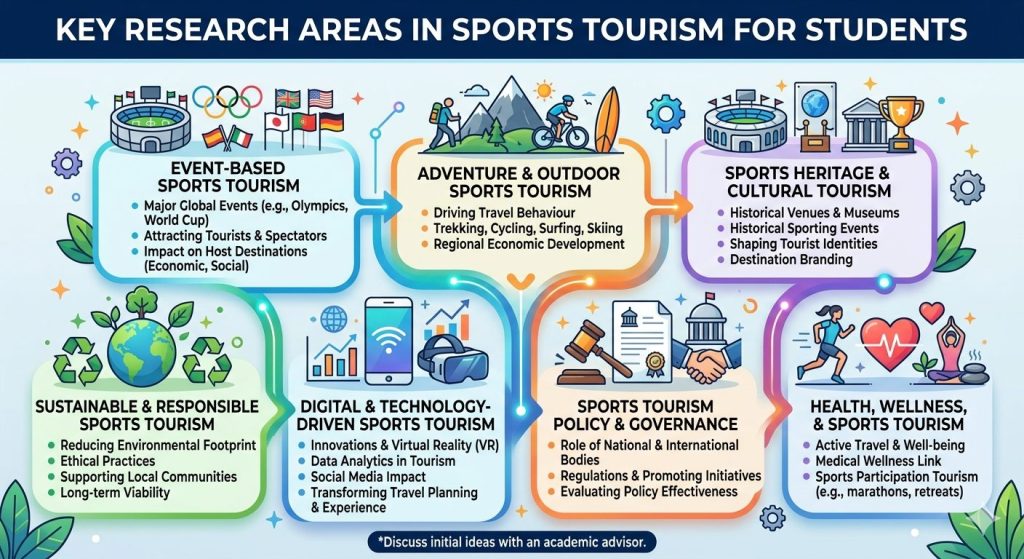
Sports tourism as an academic field covers a wide range of research domains. Before selecting a specific topic, it helps to understand the major areas where current scholarship is active. Below are the main research areas you might consider:
- Event-based sports tourism focuses on how major sporting events such as the Olympics, FIFA World Cup, and Commonwealth Games attract tourists and affect host destinations.
- Adventure and outdoor sports tourism examines how activities like trekking, cycling, surfing, and skiing drive travel behaviour and regional economic development.
- Sports heritage and cultural tourism investigates the role of iconic sports venues, museums, and historical sporting events in shaping tourist identities and destination branding.
- Sustainable and responsible sports tourism explores how the industry can reduce its environmental footprint while supporting local communities.
- Digital and technology-driven sports tourism looks at how innovations such as virtual reality, data analytics, and social media have transformed how sports tourists plan and experience travel.
- Sports tourism policy and governance examines how national and international bodies regulate, promote, and evaluate sports tourism initiatives.
- Health, wellness, and sports tourism focuses on the growing link between active travel, medical wellness, and sports participation tourism.
If you are thinking about seeking online dissertation help to explore these areas further, it is worth discussing your initial ideas with an academic advisor who specialises in tourism or sport management.
Five Example Dissertation Topics With Research Aims and Objectives
The following examples are designed to show you how a strong dissertation topic is structured at university level. Each includes a research aim and two to three clear objectives.
Example 1: The Role of Mega Sporting Events in Destination Image Transformation
Research Aim: To xamine how hosting mega sporting events influences long-term destination image and tourist perceptions in post-event periods.
Research Objectives:
- To assess how host city branding changes before and after a major sporting event
- To analyse tourist perceptions of selected host cities using qualitative interviews
- To evaluate whether post-event tourism growth aligns with pre-event projections in recent case studies
Example 2: Sustainable Practices in Adventure Sports Tourism in Rural Britain
Research Aim: To investigate the adoption of sustainable tourism practices among adventure sports operators in rural UK destinations.
Research Objectives:
- To identify the sustainability frameworks most commonly applied by UK adventure sports operators
- To assess tourist awareness of environmental impact in rural adventure tourism settings
- To recommend policy measures that support responsible growth in this sector
Example 3: Social Media Influence on Sports Tourism Decision-Making Among Millennials
Research Aim: To explore how social media platforms shape the sports tourism travel choices of millennial audiences.
Research Objectives:
- To identify which social media platforms most influence sports travel planning among millennials
- To measure the extent to which user-generated content affects destination selection
- To compare behavioural patterns across different types of sports tourism experiences
Example 4: Sports Tourism and Community Development in Sub-Saharan Africa
Research Aim: To evaluate the contribution of sports tourism initiatives to socioeconomic development in selected Sub-Saharan African communities.
Research Objectives:
- To document the types of sports tourism projects operating across three selected communities
- To measure community perceptions of economic and social benefits from sports tourism
- To identify barriers preventing effective community integration into sports tourism planning
Example 5: The Economic Legacy of the FIFA World Cup in Qatar
Research Aim: To critically analyse the economic legacy created by the 2022 FIFA World Cup for Qatar’s long-term tourism strategy.
Research Objectives:
- To examine the pre-tournament tourism infrastructure investment in Qatar
- To assess actual versus projected tourism revenue growth in the post-event period
- To evaluate the sustainability of Qatar’s sports tourism legacy model for other Gulf nations
80 Sports Tourism Dissertation Topics for 2026
The topics below are organised by research subfield to help you locate the most relevant area for your interests. All 80 topics are numbered sequentially and are suitable for undergraduate, master’s, or PhD research.
Sports Tourism and Major Sporting Events
- How do host cities manage tourism demand surges during the Olympic Games?
- What is the relationship between FIFA World Cup hosting and long-term international tourist arrivals?
- How have post-pandemic recovery strategies affected event-based sports tourism in Europe?
- To what extent do mega sporting events reshape urban infrastructure in developing nations?
- How do domestic tourism patterns shift in countries that host international rugby tournaments?
- What role does volunteer tourism play in sustaining sports events in low-income host nations?
- How do hallmark events such as Wimbledon affect seasonal tourism distribution in the UK?
- What legacy frameworks are most effective for sustaining tourism after major athletic championships?
- How does media coverage of sporting events shape destination perception among non-attendees?
- What factors determine whether a city achieves a positive tourism return on its event investment?
Sustainable and Responsible Sports Tourism
- How can cycling tourism routes be designed to minimise ecological impact in national parks?
- What sustainability certifications are most widely adopted by surf tourism operators in coastal regions?
- How do sports tourists perceive their personal responsibility towards environmental conservation?
- What is the carbon footprint of attending a single international football tournament, and how can it be reduced?
- How do local communities in alpine regions balance skiing tourism income with glacier preservation?
- What governance models best support sustainable sports tourism development in small island destinations?
- How effective are green event accreditations in reducing waste at UK marathons and endurance races?
- What barriers prevent eco-conscious sports tourists from choosing low-impact travel options?
- How does wildlife-based sports tourism in East Africa align with conservation goals?
- What role do national tourism boards play in promoting sustainable sports tourism practices?
Adventure and Outdoor Sports Tourism
- How does risk perception influence destination choice among extreme sports tourists?
- What motivates tourists to choose long-distance walking trails such as the Camino de Santiago?
- How has the growth of gravel cycling influenced rural tourism development in the British Isles?
- What is the economic value of white-water rafting tourism to remote highland communities?
- How do adventure tourism operators in New Zealand manage liability while maintaining appeal?
- What role does personal challenge play in the psychology of endurance sports tourism?
- How has indoor climbing tourism changed participation demographics in urban areas?
- What are the safety governance challenges facing paragliding tourism in mountainous regions?
- How do trail running events contribute to off-season tourism in rural European destinations?
- What is the relationship between outdoor sports tourism and physical health outcomes among participants?
Sports Heritage, Culture, and Stadium Tourism
- How do football stadium tours contribute to year-round tourism revenue for English Premier League clubs?
- What is the academic value of sports museums in preserving national sporting heritage?
- How does sports pilgrimage behaviour compare with religious tourism in terms of motivation and identity?
- What role do iconic sports venues play in shaping urban cultural tourism identities?
- How have retired Olympic stadiums been repurposed to maintain tourism relevance?
- To what extent does sports nostalgia drive heritage tourism to former championship venues?
- How do cricket grounds in the West Indies function as dual-purpose cultural and sporting tourism attractions?
- What is the visitor experience of touring hallowed sports grounds, and how can it be improved?
- How does the branding of legendary athletes influence destination tourism appeal?
- What challenges do sports heritage sites face when transitioning from active venues to tourist attractions?
Sports Tourism Policy, Governance, and Strategy
- How do national sports tourism strategies in the UK compare with those of Australia and Canada?
- What role does public-private partnership play in the development of sports tourism infrastructure?
- How effective is regional sports tourism planning in driving equitable economic development?
- What policy interventions best support women’s sports tourism in nations with gender inequality concerns?
- How do Brexit-era travel policies affect sports tourism flows between the UK and EU countries?
- What is the impact of visa accessibility on international sports tourist arrivals in South Asia?
- How do local governments measure the return on investment from sports tourism initiatives?
- What strategic frameworks help smaller nations compete for major sporting event hosting rights?
- How have post-COVID health regulations altered sports tourism policies across Southeast Asia?
- What accountability mechanisms ensure that sports tourism investment benefits host communities fairly?
Health, Wellness, and Sports Participation Tourism
- How does sports participation tourism contribute to preventive healthcare outcomes among middle-aged adults?
- What motivates retirees to engage in golf tourism as a form of active ageing?
- How do wellness retreats that incorporate sport differ from traditional sports tourism in terms of market positioning?
- What is the relationship between marathon tourism and physical health identity formation among amateur runners?
- How do yoga and sport crossover retreats attract new segments to sports tourism markets?
- What are the physical and psychological benefits reported by participants in sports volunteer tourism programmes?
- How does medical sports tourism function as a growing niche within global health tourism markets?
- What is the role of disability sport in shaping inclusive sports tourism policy in the UK?
- How do sports camps targeting youth development align with broader public health tourism strategies?
- What drives demand for health-focused cycling tourism among urban professionals in Western Europe?
Digital Technology and Sports Tourism
- How has virtual reality changed the way sports tourists research and select destinations?
- What role does artificial intelligence play in personalising sports travel recommendations?
- How do sports tourism brands use Instagram and TikTok to attract Generation Z travellers?
- What is the impact of live sports streaming on the motivation to attend events in person?
- How do wearable technologies shape the experience of sports tourists participating in endurance events?
- What data privacy concerns arise from the use of digital tracking tools in sports tourism research?
- How have sports NFTs and digital fan engagement tools influenced event-based tourism behaviour?
- What is the role of travel apps in reducing friction for international sports tourists?
- How have e-sports tourism events begun to challenge traditional sports tourism in urban destinations?
- What is the academic case for using big data analytics to forecast sports tourism demand patterns?
Sports Tourism Economics and Market Analysis
- How does sports tourism spending compare with cultural tourism spending in mixed-purpose destinations?
- What are the economic multiplier effects of hosting a Formula One Grand Prix in a mid-sized city?
- How do currency fluctuations affect international sports tourist arrivals in the British Isles?
- What factors determine price sensitivity among sports tourists attending premium events such as tennis grand slams?
- How do sports tourism revenues contribute to GDP in small Caribbean island nations?
- What is the relationship between sports tourism growth and employment levels in hospitality sectors?
- How does destination accessibility influence spending behaviour among sports tourists in rural areas?
- What economic risks do host cities take on when bidding for multi-sport international games?
- How do sports tourists contribute to local business ecosystems beyond the immediate event venue?
- What long-term economic trends are reshaping the global sports tourism market heading into 2030?
How to Choose the Right Sports Tourism Dissertation Topic for Your Level
Choosing from 80 topics can feel like a task in itself. The following guidance is designed to help you narrow your focus based on your academic level and research capacity.
Undergraduate students should look for topics that are well-supported by existing literature and that allow for primary research using surveys, interviews, or case studies. Topics in event tourism, adventure tourism, or cultural heritage tourism tend to work well at this level.
Master’s students are expected to demonstrate critical analysis and a stronger engagement with theory. Topics related to policy, governance, sustainability, or digital technology offer good opportunities to apply theoretical frameworks such as stakeholder theory, the tourist gaze, or sustainable development models.
PhD researchers should aim for topics that identify genuine gaps in the literature and that have the potential to produce original knowledge. Topics involving comparative policy analysis, longitudinal economic research, or digital transformation within sports tourism markets tend to offer stronger scope for doctoral-level contribution.
If you are early in the topic selection process, reviewing sports tourism project topics in 2025 can also help you understand which debates are still active and unresolved in the literature.
Students pursuing a master’s thesis often find it helpful to speak with a supervisor before committing to a direction. A brief research proposal that outlines your aim, objectives, and methodology can be a valuable starting point for that conversation.
Conclusion: Approaching Your Sports Tourism Dissertation With Confidence
Choosing a dissertation topic in sports tourism is more than a procedural step. It is an opportunity to contribute meaningfully to a field that shapes economies, communities, and cultures around the world. The 80 topics presented in this post reflect the breadth of current academic conversation in sports tourism and are designed to help you find a direction that genuinely interests you.
Strong topic selection is grounded in curiosity, academic relevance, and methodological feasibility. Whether you are writing a short undergraduate dissertation or embarking on doctoral research, the most important thing is to begin with a focused question that you can answer rigorously with the time and resources available to you.
This post has covered the major research areas within sports tourism, provided worked examples of how dissertation topics are structured at university level, and offered 80 original topics across a range of subfields. Use these as a starting point, not an end point. Speak with your supervisor, read recent journal articles, and allow your research question to develop organically as you engage more deeply with the literature.
Students who approach their dissertation with genuine intellectual curiosity and careful planning consistently produce work that stands out. You are well-positioned to do the same.
