


Media Studies Dissertation Topics for 2026

Questions Students Are Asking About Media Studies Dissertation Topics
These questions come from student forums, Reddit threads, academic Facebook groups, and university Q&A platforms. They reflect how real students think when they feel stuck trying to pick a dissertation topic.
- What are the best media studies dissertation topics for 2026?
- How do I choose a media studies dissertation topic that is original and researchable?
- What are the most trending media studies dissertation topics right now?
- Are there media studies dissertation topics that work for both undergraduate and master’s level?
- What is the difference between a media studies and a communication dissertation topic?
- Can I find media studies dissertation topics with examples of aims and objectives?
- Which areas of media studies are most relevant for research in 2026?
- How do I narrow down a broad media topic into a focused dissertation idea?
- Where can I get media studies dissertation help if I am struggling with topic selection?
Why Choosing the Right Dissertation Topic in Media Studies Matters
Choosing the right dissertation topic is one of the most important decisions you will make in your academic journey. In media studies, this choice is especially significant because the field is constantly evolving. New platforms, technologies, and cultural shifts reshape how we communicate, consume content, and make meaning every year.
A well-chosen topic does more than satisfy your supervisor. It demonstrates that you understand the field, that you can identify a genuine research gap, and that your work can contribute to ongoing academic conversations. A weak topic, by contrast, can stall your research before it begins.
Many students struggle with this stage. Some choose topics that are far too broad. Others pick ideas that have been researched so heavily that there is little left to add. Some simply do not know where the current gaps in knowledge are. This post exists to solve that problem directly.
Whether you are looking for contemporary media studies research topics at undergraduate level or searching for advanced media and communication dissertation topics for a PhD proposal, this guide covers all levels and all major subfields. If you need personalised support alongside your reading, online dissertation help is available from academic specialists who understand the expectations of your institution.
Download Media Studies Dissertation Topics PDF
Students who want a curated, expert-selected list of media studies dissertation topics can access a downloadable PDF version. This resource is put together by academic professionals with backgrounds in media, journalism, communication, and cultural studies.
To receive the PDF, students complete a short form. The topics in the PDF are personalised based on your academic level, research interests, and area of specialisation within media studies. It is a practical tool for students who want to move quickly from confusion to a focused research direction.
Key Research Areas in Media Studies for 2026
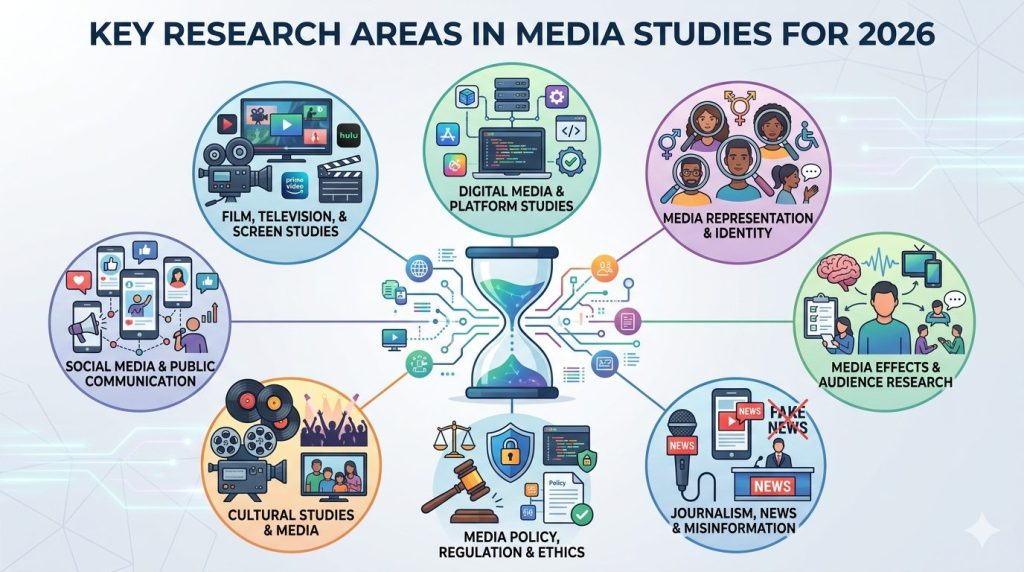
Media studies is a broad and interdisciplinary field. Before choosing a topic, it helps to understand the main areas scholars are currently working in. Below are the most established and active research domains.
Digital Media and Platform Studies
This area examines how digital platforms shape communication, identity, and public life. Research here often includes algorithm studies, platform governance, digital labour, and the politics of visibility online.
Media Representation and Identity
Representation research looks at how media portray gender, race, class, disability, and other aspects of identity. It considers who gets to tell stories, whose stories are told, and with what consequences for audiences.
Media Effects and Audience Research
This domain asks what media does to people, and what people do with media. It includes research on media influence, selective exposure, misinformation, and how different audiences interpret content differently.
Journalism, News, and Misinformation
Research in this area covers the changing nature of journalism, press freedom, the economics of news media, and the spread of disinformation across digital channels.
Media Policy, Regulation, and Ethics
This area focuses on how governments, platforms, and institutions govern media. It includes copyright law, platform liability, content moderation, and the ethics of automated decision-making.
Cultural Studies and Media
Cultural studies approaches examine media texts as cultural artefacts. This includes fan culture, popular culture, media memory, and the role of media in constructing national or community identities.
Social Media and Public Communication
Social media studies covers political communication, influencer culture, online communities, health communication, and the role of social platforms in shaping public opinion.
Film, Television, and Screen Studies
This area analyses visual storytelling, genre conventions, production culture, streaming economies, and how screen media reflects and shapes social values.
Five Example Media Studies Dissertation Topics with Aims and Objectives
These examples show how a strong dissertation topic is structured. Each one includes a research aim and two to three focused objectives.
Example 1: Algorithmic Influence on Political News Exposure
Research Aim: To examine how social media algorithms shape political news exposure among young adults in the United Kingdom.
Research Objectives:
- To identify the mechanisms through which algorithmic curation affects political content visibility on major platforms
- To analyse the self-reported news consumption habits of 18–25-year-olds in relation to algorithm-driven feeds
- To assess whether algorithmic exposure contributes to political polarisation among young digital news consumers
Example 2: Gender Representation in British Television Advertising
Research Aim: To critically analyse shifts in gender representation in British television advertisements between 2015 and 2025.
Research Objectives:
- To map changes in the portrayal of gender roles in a sample of primetime television advertisements
- To evaluate whether industry self-regulation has produced measurable changes in gendered advertising content
- To explore how audience focus groups interpret current representations in comparison with older advertisements
Example 3: Misinformation During Health Crises on Twitter/X
Research Aim: To investigate the spread and correction of health misinformation on Twitter/X during the COVID-19 pandemic.
Research Objectives:
- To identify categories of health misinformation that spread most rapidly during the first wave of the pandemic
- To examine what correction strategies were deployed by health authorities and their measurable effectiveness
- To assess the role of platform-level policies in limiting the reach of false health claims
Example 4: Representation of Disability in Streaming Drama
Research Aim: To explore how disability is represented in contemporary streaming drama series produced in the United Kingdom and United States.
Research Objectives:
- To analyse the frequency and nature of disabled characters across a selected sample of popular streaming dramas
- To compare representations with established academic frameworks of disability and media
- To consider how casting practices influence the authenticity of disabled representation on screen
Example 5: Influencer Marketing and Young Consumer Behaviour
Research Aim: To understand the impact of social media influencer marketing on purchasing decisions among teenagers aged 13 to 18.
Research Objectives:
- To examine the persuasion mechanisms embedded within influencer content on Instagram and TikTok
- To assess teenagers’ awareness of sponsored content and its effect on trust in influencer recommendations
- To evaluate the adequacy of current advertising disclosure regulations in protecting young consumers
80 Media Studies Dissertation Topics for 2026
The topics below are organised by subfield. They are suitable for undergraduate, master’s, and doctoral level research. Each topic is focused, researchable, and relevant to the academic landscape of 2026.
Digital Media and Platform Governance
- The role of platform transparency reports in public accountability: a comparative study of Meta and TikTok
- Algorithmic amplification of political extremism on YouTube: a content analysis of recommended video pathways
- The governance gap in short-form video moderation: TikTok content policy in practice
- Digital labour and unpaid value creation: how content creators subsidise platform economies
- The right to be forgotten in the age of search engine dominance: policy implications for UK users
- Platform liability and the intermediary role of social media companies in the spread of illegal content
- Dark patterns in social media interface design and their effect on user consent
- The role of decentralised social platforms in challenging mainstream platform monopolies
- Datafication of childhood: how children’s apps collect and monetise behavioural data
- The politics of demonetisation: examining creators’ experiences with automated content enforcement
Media Representation and Identity
- Muslim representation in British tabloid newspapers between 2018 and 2025
- The portrayal of LGBTQ+ characters in primetime UK drama: progress or performative inclusion?
- Representations of ageing women in mainstream magazine media
- How mainstream film portrays mental health: a decade of change in Hollywood output
- Black British identity in television comedy: authenticity, stereotype, and audience reception
- Representations of working-class communities in reality television programming
- Media portrayal of asylum seekers in European national newspapers: a cross-cultural analysis
- The role of children’s animated media in constructing early gender identity
- Indigenous representation in documentary filmmaking: ethics, power, and voice
- How disability is framed in UK news reporting: a critical discourse analysis
Media Effects and Audience Research
- The relationship between social media use and body image dissatisfaction in adolescent girls
- Selective exposure and political beliefs: do news consumers actively avoid challenging content?
- Media framing of climate change and its effect on public risk perception in the UK
- The spiral of silence in online political discussion: evidence from Twitter/X user behaviour
- How exposure to violent video games affects aggression in adult males: a meta-analytical review
- Parasocial relationships with YouTube creators: emotional attachment and perceived authenticity
- The role of true crime podcasts in shaping audience attitudes toward criminal justice
- News fatigue and disengagement among millennials: causes and consequences for democratic participation
- How media coverage of suicide influences copycat behaviour: ethical reporting standards and their impact
- Fear appeals in public health advertising: effectiveness across different demographic groups
Journalism, News, and Misinformation
- The decline of local journalism in England and its consequences for community representation
- Fact-checking organisations and their role in combating political misinformation online
- How news algorithms on aggregator apps determine what counts as front-page news
- The economic model of subscription journalism and its implications for press freedom
- Source diversity in broadcast news: who gets to speak in UK television journalism?
- Deepfake video technology and the future of trust in visual news evidence
- Journalistic norms and social media: how Twitter/X has changed editorial decision-making
- The relationship between press ownership concentration and political news bias in the UK
- WhatsApp as a news channel in developing nations: reach, trust, and misinformation risk
- How automated journalism affects reader trust and perceived credibility of news content
Media Policy, Regulation, and Ethics
- The Online Safety Act 2023 and its implications for free speech in the United Kingdom
- Content moderation at scale: the limits of human and automated review systems
- Platform regulation in the European Union and its global spillover effects
- Advertising standards and influencer disclosure: are current rules effective for audiences under 25?
- The ethics of surveillance advertising and the future of a cookieless internet
- Media plurality and public interest broadcasting: the future of the BBC licence fee model
- Children’s media regulation in the streaming era: gaps in current UK frameworks
- The right to privacy versus the public interest: a case study of investigative journalism ethics
- Hate speech online and the limits of platform self-regulation in the UK context
- Artificial intelligence in content moderation: bias, accountability, and due process concerns
Cultural Studies and Media
- The construction of British national identity in royal family media coverage
- How fan communities on Reddit produce and contest meaning around popular television series
- Nostalgia marketing in media: how brands use historical aesthetics to create emotional connection
- The cultural significance of true crime as a dominant media genre in the 2020s
- Post-colonial narratives in contemporary British cinema
- Reality television and the commodification of working-class aspiration
- Media memory and national trauma: how news archives frame historical conflict
- Celebrity culture and aspirational identity in women’s lifestyle magazines
- The role of music streaming platforms in reshaping cultural gatekeeping
- K-pop as a global cultural product: media strategies and fan labour in a transnational context
Social Media and Public Communication
- The role of social media in shaping public opinion during UK general elections
- Health misinformation on Instagram and the responsibility of influencer communicators
- Online activism and its transition into real-world political change: a case study approach
- The performative nature of grief on social media following celebrity deaths
- Social media and the construction of protest narratives: Black Lives Matter in UK digital spaces
- How brands navigate political controversy on social media without alienating audiences
- TikTok and the democratisation of political commentary among Generation Z
- The impact of social media use on loneliness and social isolation in adults over 60
- Hashtag activism and its limitations as a tool for structural change
- Instagram and the presentation of motherhood: identity, aspiration, and commercial influence
Film, Television, and Screen Studies
- The Netflix effect: how streaming has changed genre development and narrative pacing in drama
- Female authorship in contemporary British cinema: barriers, breakthroughs, and critical reception
- The representation of artificial intelligence in Hollywood science fiction: fear, utility, and ethics
- How the streaming wars have changed the economics and aesthetics of prestige television
- Diversity behind the camera: does production team diversity improve on-screen representation?
- The role of film festivals in shaping critical discourse around world cinema
- Documentary ethics in the age of true crime: consent, exploitation, and victim representation
- How video game adaptations are reshaping the economics of screen production
- The portrayal of terrorism in British television drama: security framing and Muslim identity
- Fan fiction and transformative works: copyright, creativity, and the limits of media ownership
How to Choose the Right Topic from This List
With 80 options in front of you, it is easy to feel overwhelmed again. These practical steps will help you narrow down quickly.
Step one: Identify the two or three subfields that genuinely interest you. You will be spending months with this topic, so engagement matters.
Step two: Check whether your institution has supervisors with expertise in that area. A good supervisor match improves your research significantly.
Step three: Test the scope. Ask yourself: can this be answered with the methods I have access to? Is there enough existing literature to build on, but enough of a gap to contribute something new?
Step four: Read two or three recent journal articles in your chosen area. If you find yourself reading faster and wanting to know more, that is a strong signal you are on the right track.
Students who need tailored guidance on refining a topic or structuring a proposal can explore media studies dissertation help from qualified academic professionals. This kind of support is especially valuable at the early stages when the research direction is still forming.
Conclusion
Selecting a media studies dissertation topic in 2026 requires you to think carefully about what the field needs, what your institution values, and what you are genuinely capable of researching within your timeframe. The topics and examples in this post are designed to give you a strong, structured starting point.
Media studies is one of the most dynamic and socially relevant disciplines in higher education today. Whether your interest lies in digital media, media representation, journalism ethics, platform governance, or screen culture, there is a meaningful research question waiting for you to pursue it.
The most important thing you can do at this stage is make a decision and commit to it. Paralysis over topic selection wastes time that could be spent on reading, designing your methodology, or drafting your proposal. Use the examples and topic lists in this post as a scaffold, talk to your supervisor early, and trust the process.
Academic integrity begins with choosing a topic that is honest, original, and genuinely yours. Approach your dissertation with curiosity, and the research will follow naturally.
